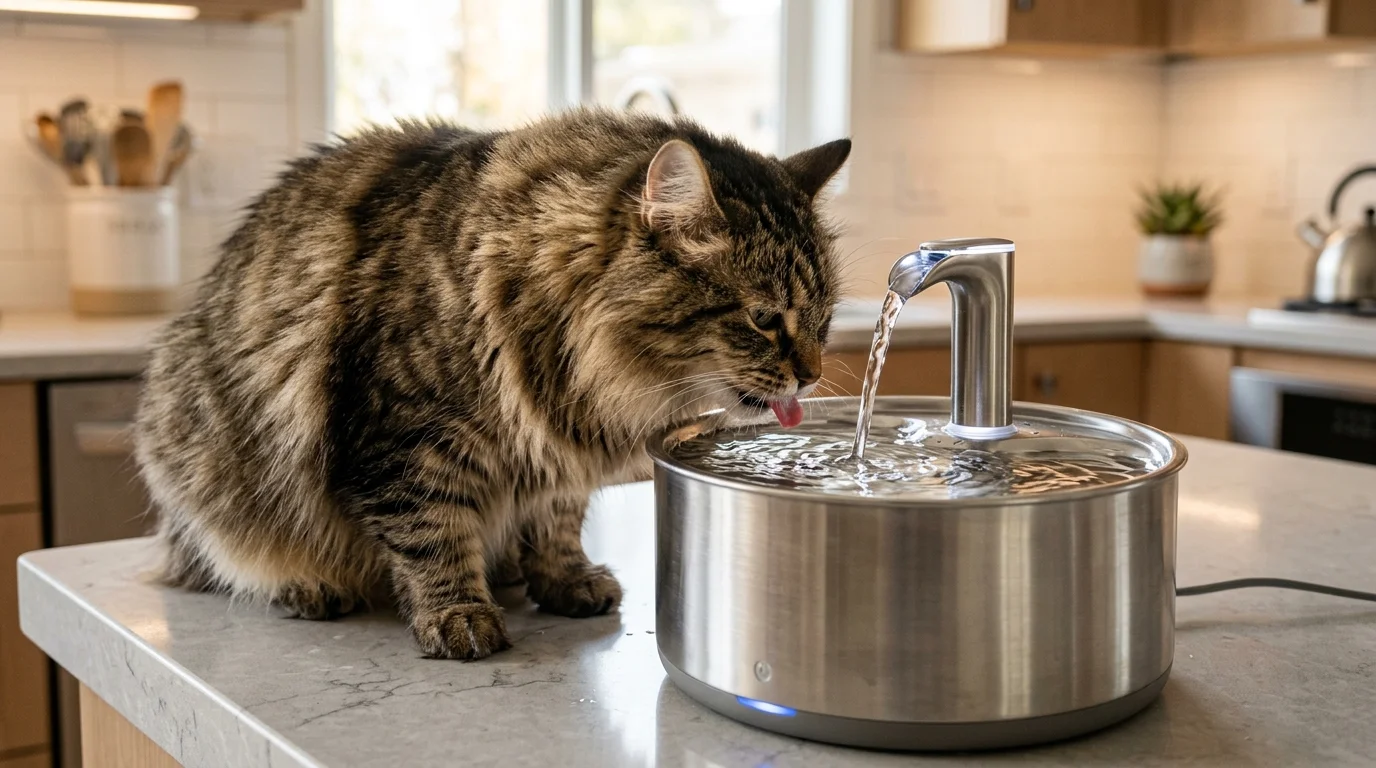
Cats evolved as desert animals with a low thirst drive, deriving moisture directly from prey. In modern homes fed on dry kibble, chronic low-grade dehydration is the leading cause of feline kidney disease and lower urinary tract issues.
If your cat paws at the faucet or refuses standing water, a moving stream mimics natural fresh springs. Pairing a fountain with a high-quality automatic cat feeder and a clean stainless steel litter box ensures a healthy daily routine.
Why Picky Cats Refuse Ordinary Bowls
- Whisker Fatigue: Deep, narrow bowls crush sensitive whiskers during drinking.
- Odor & Taste Retention: Plastic bowls leach chemical tastes into water after a few days.
- Stagnant Water Instinct: Cats instinctively avoid still water which may contain bacteria in nature.
Top 3 Fountains for Ultra-Picky Cats
| Model | Material | Noise Level | Key Feature |
|---|---|---|---|
| Veken 108oz Stainless | 304 Stainless Steel | < 25 dB | Quadruple filtration & wide bowl |
| Catit PIXI Smart | Stainless Steel / ABS | < 20 dB | App alerts & ergonomic spout |
| PETLIBRO Dockstream 2 | 316 Stainless Steel | < 23 dB | Wireless pump & battery backup |
Frequently Asked Questions
Why do some cats refuse to drink from plastic water bowls?
Plastic bowls retain odors and taste, develop micro-scratches that harbor bacteria, and trigger whisker fatigue if narrow. Stainless steel or ceramic fountains solve all three issues.
How do silent water fountains encourage nervous cats to drink?
Ultra-quiet pumps operating under 20–30 dB eliminate motor hums that scare timid cats, leaving only a gentle, natural water stream.
Final Thoughts
Proper hydration is the single most effective way to prevent vet bills for kidney stones and urinary blockages. Explore our full cat water fountain rankings or check our side-by-side product comparisons.