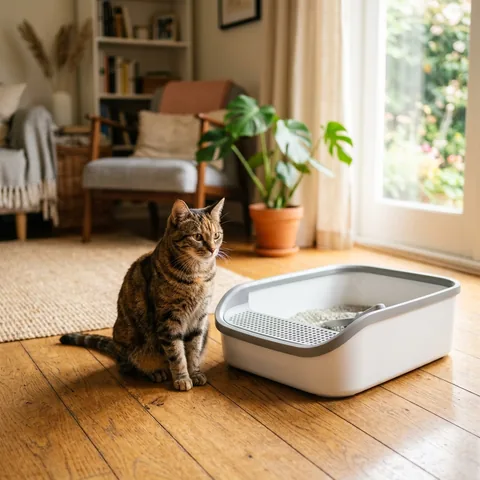
Understanding Inappropriate Elimination (Middening)
When a cat poops outside the litter box, veterinarians refer to it as middening or inappropriate elimination. Unlike spraying or urine marking (which is primarily territorial), defecating outside the box almost always stems from physical discomfort, stress, or aversion to the litter box environment. Felines thrive on predictable routine and cleanliness, so sudden changes in their elimination habits are an important communication signal.
7 Reasons Why Your Cat Is Pooping Outside the Box
1. The Litter Box Isn't Clean Enough
Cats have an olfactory system up to 14 times stronger than humans. If a litter box contains leftover waste, clumped urine, or strong ammonia smells, your cat will look for a cleaner spot nearby (like your carpet or bath mat).
The Fix: Scoop traditional boxes at least twice daily. If your work schedule makes this difficult, consider a self-cleaning model like the PetSafe ScoopFree SmartSpin which sifts automatically after every visit.
2. Medical Issues & Digestive Discomfort
Constipation, colitis, inflammatory bowel disease (IBD), and intestinal parasites can cause acute abdominal pain. If a cat associates pain while defecating with being inside the litter box, they will attempt to poop elsewhere to escape the pain.
The Fix: Schedule a vet visit immediately to bring in a stool sample and check for constipation, intestinal inflammation, or GI distress.
3. Joint Pain or Arthritis (Especially in Senior Cats)
As cats age, stepping over high litter box walls or climbing up steep entry ramps becomes painful. If getting into the box hurts their hips or spine, senior cats will simply poop right outside the entry step on flat ground.
The Fix: Switch to a low-entry litter box or add an ergonomic ramp. Open-top low profile boxes make entry effortless for older felines.
4. Litter Texture or Scent Aversion
Cats are extremely sensitive to the feel of litter under their paws. Heavily scented litters, hard silica crystals, or coarse pellets can cause tactile aversion. If the litter hurts their paws, they will squat on soft carpets instead.
5. Multi-Cat Territory & Box Shortage (The N+1 Rule)
In multi-cat households, territorial bullying often occurs near litter boxes. A dominant cat might block access to a hallway box, forcing the submissive cat to poop in a hidden corner or bedroom rug.
The Fix: Always follow the N+1 Rule: provide one litter box per cat in your household, plus one extra. In a 2-cat home, you should have 3 separate litter boxes located in different rooms.
6. Box Size & Hood Enclosure Stress
A standard adult cat needs a litter box that is at least 1.5 times their body length from nose to tail base. If a covered hood feels cramped, dark, or traps dust, your cat will feel vulnerable and avoid going inside.
The Fix: Remove the hood or upgrade to a spacious, wide-entry model like the Casa Leo Leo's Loo Too.
7. Residual Odor & Chemical Cleaners
Cleaning carpet spots with household ammonia or scented sprays leaves chemical residues. Since ammonia is a byproduct of urine, using ammonia-based cleaners actually attracts cats back to the same spot.
The Fix: Clean all accidents with a specialized enzymatic pet cleaner that completely breaks down uric acid and organic compounds.
Step-by-Step Action Plan to Fix the Problem
- Rule Out Health Issues First: Have your vet check for intestinal issues, arthritis, or anal gland inflammation.
- Thorough Enzymatic Cleaning: Saturate all carpet/rug accident spots with an enzymatic cleaner to eliminate invisible scent trails.
- Add an Extra Box in a Quiet Location: Place a new open-top box in a quiet, low-traffic area away from noisy washing machines or noisy appliances.
- Switch to Unscented Fine-Clumping Litter: Fill the box with 3 inches of soft, unscented clumping clay litter.
- Consider Automatic Self-Cleaning: If cleanliness is the trigger, an automatic box guarantees a spotless litter bed 24/7. View our top-rated picks in our Automatic Litter Box Comparison Guide.
When to Consult Your Veterinarian Immediately
If your cat exhibits any of the following warning signs alongside pooping outside the box, seek emergency veterinary advice:
- Blood present in stool or straining without producing feces
- Vomiting, lethargy, or refusal to eat for over 24 hours
- Vocalizing loudly or crying while attempting to eliminate