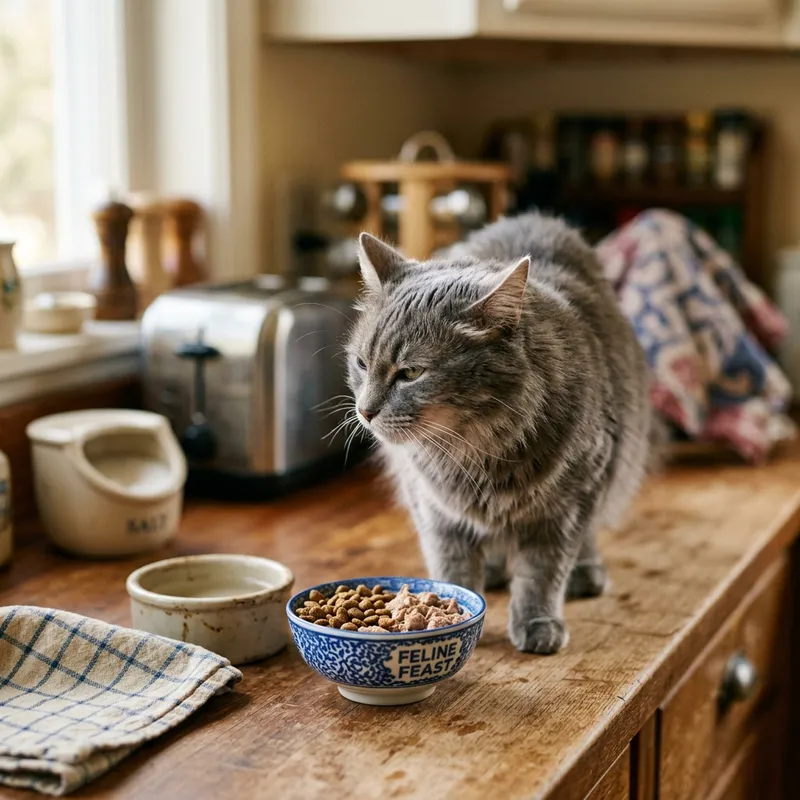
Your cat walks up to the food bowl, sniffs it intently, then walks away like you've offered garbage. You've tried three different brands. Nothing works. Before you panic, know this: a cat sniffing food and refusing to eat is one of the most common concerns vets hear — and the cause ranges from trivially simple to medically urgent.
1. Upper Respiratory Infection (The #1 Cause)
Cats rely on smell more than taste to evaluate food. They have roughly 200 million scent receptors compared to our 6 million. When a cat has even a mild upper respiratory infection (URI), nasal congestion blocks those receptors. The food doesn't smell like food anymore — so the cat rejects it.
Signs to look for: Sneezing, watery eyes, nasal discharge, lethargy. Even a minor cold can completely kill appetite.
What to do: Try warming the food slightly (15 seconds in the microwave, stir well). Warm food releases more aromatic compounds. Strong-smelling foods like tuna or sardines in water can also break through congestion. If symptoms last more than 48 hours, see your vet.
2. Dental Pain or Oral Disease
Your cat wants to eat — the smell is appealing — but biting down hurts. Dental disease affects over 70% of cats by age 3, according to the American Veterinary Dental College. Common culprits include:
- Tooth resorption — the tooth structure breaks down, exposing nerves
- Gingivitis — swollen, inflamed gums
- Stomatitis — severe inflammation of the mouth lining
- Broken teeth — from chewing hard objects
Signs to look for: Drooling, pawing at the mouth, dropping food, eating only on one side, or preferring wet food over dry.
What to do: Switch to soft or pâté-style wet food immediately. Schedule a dental exam. Most dental issues require professional cleaning under anesthesia.
3. Food Fatigue (Whisker Stress Is Real)
Cats get bored of the same food. This isn't pickiness — it's a survival instinct called neophilia. In the wild, dietary variety ensures balanced nutrition. A cat eating the same chicken pâté for 6 months may simply be done with it.
Related: whisker fatigue. If your cat's bowl is deep and narrow, their sensitive whiskers hit the sides while eating, causing discomfort. The cat approaches, sniffs (confirming the food is edible), but won't eat because the bowl itself is the problem.
What to do: Rotate between 2–3 protein flavors weekly. Use a wide, shallow dish or a flat plate. An automatic cat feeder with portion control can also help by dispensing fresh food at consistent times rather than leaving food sitting out.
4. Stress or Environmental Changes
Cats are creatures of habit. Any change in their environment can trigger appetite loss:
- Moving to a new home
- New pet or family member
- Rearranged furniture
- Loud construction nearby
- Changed litter brand or litter box location
- Visitors staying in the home
A stressed cat won't eat even if hungry. The fight-or-flight response suppresses appetite — eating requires feeling safe.
What to do: Provide a quiet, private eating area away from high-traffic zones. Set up safe spaces and hiding spots around the house. Most cats resume eating within 24–48 hours once they acclimate. If not, consult your vet.
5. Food Temperature
Cats instinctively prefer food at “mouse body temperature” — around 100°F (38°C). Food straight from the fridge is roughly 37°F. The cold suppresses odor release, making the food smell bland and unappealing.
What to do: Let refrigerated food sit at room temperature for 15–20 minutes before serving, or microwave for 10–15 seconds (stir thoroughly to eliminate hot spots). This single change fixes the problem for many cats.
6. Nausea or Gastrointestinal Issues
A nauseated cat will approach food, sniff it, then turn away — sometimes lip-licking or swallowing repeatedly. Common causes include:
- Hairballs blocking the digestive tract
- Inflammatory bowel disease (IBD)
- Pancreatitis
- Intestinal parasites
- Ingesting a foreign object (string, rubber bands, hair ties)
Signs to look for: Vomiting, diarrhea, hunched posture, hiding, weight loss.
What to do: If vomiting occurs more than twice in 24 hours, or if refusal lasts more than 24 hours, see your vet. Cats can develop hepatic lipidosis (fatty liver disease) after just 2–3 days without eating — this is life-threatening.
7. Medication Side Effects
Many common cat medications cause appetite suppression or nausea as a side effect:
- Antibiotics (metronidazole, amoxicillin)
- Pain medications (buprenorphine, meloxicam)
- Chemotherapy drugs
- Deworming treatments (temporary, usually resolves in 24–48 hours)
What to do: Don't stop medication without consulting your vet. Ask about appetite stimulants (mirtazapine is commonly prescribed for cats) or anti-nausea medication to take alongside the primary treatment.
8. The Food Has Gone Bad
Your cat's sense of smell is 14 times stronger than yours. Food that smells fine to you may already be oxidized, stale, or contaminated to your cat. Dry kibble left in a bowl for 24+ hours absorbs ambient odors and loses its appeal. Wet food left out for more than 2–4 hours at room temperature starts bacterial growth.
What to do: Serve fresh food at every meal. Store dry food in an airtight container (not the original bag). Discard wet food after 4 hours. Clean the bowl with soap and hot water between meals — residual old-food smell contaminates fresh servings.
9. Underlying Medical Conditions
Persistent appetite loss can signal serious health issues:
- Kidney disease — causes nausea and metallic taste (most common in cats 7+)
- Hyperthyroidism — usually causes increased appetite, but some cats eat less
- Cancer — tumors can cause pain, nausea, or metabolic changes
- Liver disease — causes nausea and jaundice
- Diabetes — fluctuating blood sugar affects appetite
What to do: If your cat hasn't eaten for more than 24 hours, or has eaten very little for 2–3 days, a vet visit is mandatory. Blood work will identify most of these conditions quickly.
When to Call the Vet: The 24-Hour Rule
For adult cats: Not eating for 24 hours warrants a vet call. Not eating for 48+ hours is an emergency.
For kittens under 6 months: Not eating for 12 hours is a vet visit. Their tiny bodies have minimal reserves.
For senior cats (10+): Any appetite change lasting more than a day needs investigation. Kidney disease and hyperthyroidism are common at this age.
Critical warning signs that need immediate vet attention:
- Not eating AND not drinking water
- Vomiting repeatedly
- Lethargy or hiding
- Yellowing of the ears or gums (jaundice)
- Difficulty breathing
- Straining in the litter box
Quick Tricks to Tempt a Reluctant Eater
Before the vet visit, try these safe appetite stimulators:
- Warm the food to body temperature (10–15 seconds in the microwave)
- Add warm water or low-sodium chicken broth to dry food
- Sprinkle nutritional yeast on top (cats love the savory flavor)
- Try a different protein — if they eat chicken, try fish or duck
- Hand-feed small amounts — some cats eat for the social interaction
- Use a flat plate instead of a deep bowl to avoid whisker fatigue
- Move the food bowl to a quiet, safe location away from the litter box and water fountain
The Bottom Line
A cat sniffing food and walking away is usually caused by something simple: cold food, a stuffy nose, food fatigue, or a dirty bowl. Try the quick fixes first. But never ignore prolonged food refusal — cats can develop fatal liver disease in as little as 48–72 hours without eating.
Keep your cat's feeding setup fresh and stress-free. Our guide to the best automatic cat feeders covers timed feeders that dispense fresh portions throughout the day, solving both portion control and food staleness issues.