Affiliate Disclosure: This post contains affiliate links. If you purchase through our links, we may earn a small commission at no additional cost to you. We only recommend products tested for feline health, safety, and durability.
Commercial cat toys are frequently laden with microplastics, synthetic polyester plush, chemical fragrances, and toxic solvent adhesives. When cats hunt, they kick, bite, lick, and gnaw with razor-sharp canine teeth. Inevitably, synthetic fibers end up being ingested.
By crafting DIY natural cat toys with safe, biodegradable household staples—like unbleached cardboard boxes, cardboard toilet paper tubes, natural wine corks, unbleached cotton socks, and crumpled brown kraft paper—you control exactly what touches your cat's mouth and claws. Below, we break down five zero-cost tutorials you can craft in under ten minutes, followed by the best pet-safe natural materials (like pure organic catnip and untreated plant rope) to supercharge your creations.
The Natural Materials Safety Checklist: What's Safe vs. What's Toxic
Before raiding your recycling bin, feline safety must come first. Cats are opportunistic predators that will swallow small objects or tear flimsy materials to shreds. Keep this essential checklist handy:
Safe Household Materials (Green Light)
- Plain Corrugated Cardboard: Free of heavy colored inks, plastic lamination, and packing tape.
- Toilet Paper & Paper Towel Tubes: 100% natural pressed cellulose fiber.
- 100% Cotton Socks or Fabric Scraps: Clean, unbleached or vegetable-dyed cotton with no loose hanging threads.
- Natural Wine Corks: Real oak tree cork bark (boil for 5 minutes to sterilize and remove wine aroma). Avoid synthetic rubber corks.
- Brown Kraft Paper & Grocery Bags: Clean brown packing paper with handles removed.
- Untreated Natural Sisal & Jute Twine: Raw plant fibers free from petro-chemical oil lubricants.
Toxic Household Materials to NEVER Use (Red Light)
- Rubber Bands & Hair Ties: Top surgical emergency cause in vet clinics; cause fatal intestinal blockages.
- Yarn, String, or Ribbon Unsupervised: Acts as a deadly linear foreign body that saws through intestinal walls when swallowed.
- Plastic Googly Eyes & Small Bells with Gaps: Easily detached and ingested; small bells can catch claws and rip nail beds.
- Hot Glue or Superglue: Ingestion of synthetic acrylic adhesives can cause mouth ulcerations and toxicity.
- Styrofoam & Foam Peanuts: Crumbles into static chunks that cats inhale or choke on.
5 Zero-Cost DIY Cat Toys You Can Make at Home
Here are five thoroughly battle-tested, no-sew homemade cat toy tutorials designed to stimulate your cat's natural hunting cycle: Stalk, Chase, Pounce, Catch, and Eat.
1. The Cardboard Treat Foraging Puzzle Box (Brain Enrichment)
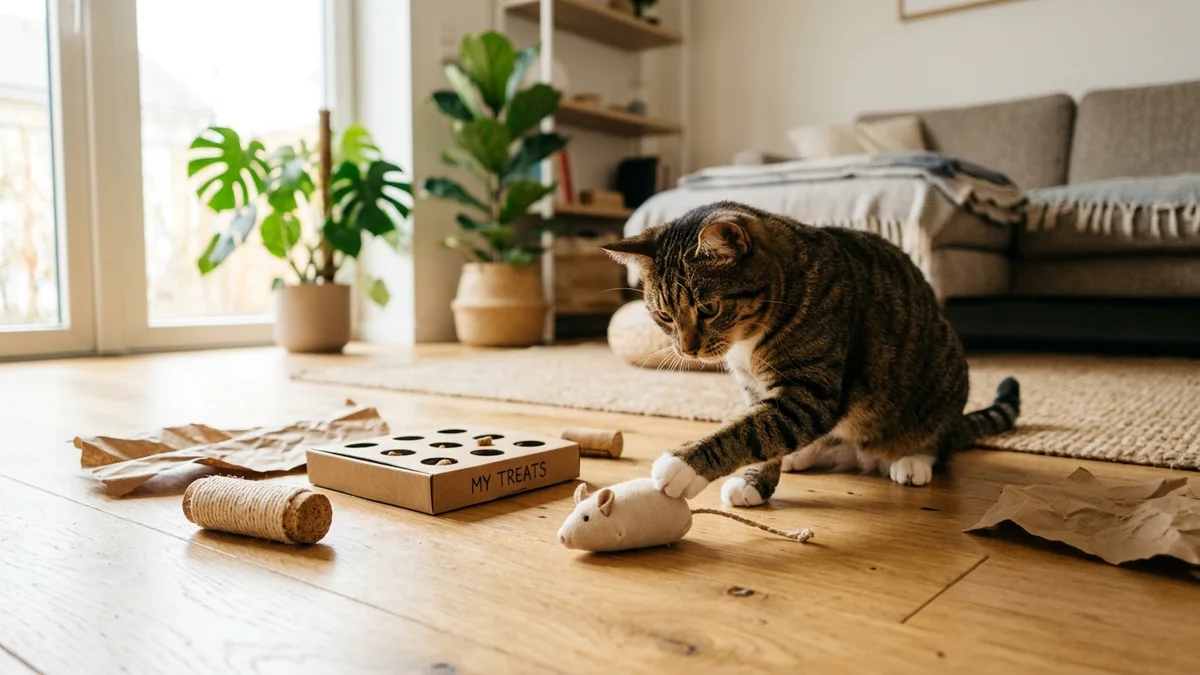
Popularized by feline behaviorist Jackson Galaxy, the cardboard puzzle box mimics the natural foraging behavior of wild felines hunting through hollow logs and rodent burrows. This is one of the best DIY cat toys for bored cats prone to overeating.
- Materials: A shallow cardboard delivery box (e.g., shoe box or 2-inch shipping box), pencil, utility knife, scissors, dry cat treats or kibble.
- Step 1: Tape the box lid shut using a strip of water-activated paper tape or fold the flaps securely inside.
- Step 2: Trace 6 to 8 staggered circles around the top and sides, ranging from 1.5 to 2.5 inches in diameter (large enough for your cat's paw and wrist to reach in, but too small for their head).
- Step 3: Carefully cut out the circles and smooth any rough cardboard edges with your thumb.
- Step 4: Drop a handful of crunchies, cork balls, or crumpled paper wads inside. Place it on your living room rug and watch your cat hook and fish out their prizes with their front paws.
2. The 3-Minute Toilet Paper Roll Forager & Rattle
Don't toss your empty toilet paper rolls—they are the most versatile craft item in feline enrichment. This takes less than 3 minutes to build with zero glue.
- Materials: 1 empty cardboard toilet paper roll, scissors, a pinch of dry kibble or pure catnip.
- Step 1: Cut four 1/2-inch vertical slits around both ends of the tube.
- Step 2: Fold the flaps inward on one end like a closed cardboard shipping box so it stays firmly shut without tape.
- Step 3: Use a hole punch or scissor tips to poke 3 small dime-sized holes around the belly of the tube.
- Step 4: Drop in a pinch of fragrant catnip and 4 pieces of crunchy kibble. Fold the opposite end flaps closed.
- Step 5: When batted across tile or hardwood, the tube rolls erratically, releasing enticing scent and an occasional reward treat!
3. The No-Sew Organic Cotton Sock Mouse
Every household has a single orphaned cotton sock whose partner disappeared in the laundry. Repurpose it into a rugged, washable kicker toy that holds up against aggressive rabbit-kicking.
- Materials: 1 clean 100% cotton crew or ankle sock, scrap cotton fabric or organic cotton balls, 1-2 tablespoons of pure catnip.
- Step 1: Stuff the toe of the sock with torn scrap fabric, clean paper crinkles, and a generous tablespoon of dried catnip.
- Step 2: Pack the stuffing firmly until you have a plump 4-to-5 inch body.
- Step 3: Tie a tight, double-overhand knot right behind the body. Pull with maximum leverage so claws cannot loosen it.
- Step 4: Cut the remaining open cuff into three lengthwise strips and braid them tightly to form an indestructible natural tail. Knot the end of the braid and snip excess fabric.
4. The Natural Sisal & Wine Cork Roller
Natural oak cork is lightweight, buoyant, and has the perfect tactile give for cats to sink their claws into without breaking a tooth. Adding untreated plant rope turns it into an irresistible rolling bat-toy.
- Materials: Real oak wine cork (boiled for 5 minutes and thoroughly dried), untreated jute or sisal twine, a thick blunt tapestry needle or skewer.
- Step 1: Thread 3 feet of natural jute cord through a blunt needle.
- Step 2: Poke through the center axis of the cork from end to end, leaving a 4-inch tail of cord on one side.
- Step 3: Wrap the cord tightly around the outer cylinder of the cork in neat spirals, tucking the starting end beneath the loops.
- Step 4: Tie a secure knot at the base and leave 3 inches of frayed jute fibers at the tail end to flutter like insect wings when rolled.
5. The Crinkle Brown Kraft Paper Kicker Fish
Cats are acoustically tuned to the high-frequency rustle of dry leaves and brush—the sound of prey moving through ground cover. Brown kraft grocery bags provide this exact auditory trigger without synthetic plastic crinkle film.
- Materials: 1 plain brown paper bag or Amazon packing paper, untreated jute twine, organic catnip leaves.
- Step 1: Cut an 8" × 12" rectangle of brown paper. Crumple it into a tight ball several times to soften the paper and maximize crinkliness.
- Step 2: Flatten it out and sprinkle dried catnip along the center crease.
- Step 3: Roll the paper into an elongated cigar cylinder roughly 1.5 inches thick.
- Step 4: Pinch both ends about 2 inches in from the edge and wrap firmly with natural jute twine, tying a double knot.
- Step 5: Fan out the crushed paper ends to resemble fish fins and tails. Cats love wrestling this between their front paws while kicking with their hind legs!
Natural Upgrade Supplies: The Best Add-Ins for DIY Cat Toys
While zero-cost household recycling gets you 80% of the way there, adding high-potency organic herbs, pet-safe heavy-duty twine, or an artisan natural chew toy can elevate your DIY toys to heirloom-level playtime favorites. Below are three verified, 100% natural picks to enhance your homemade toy station:
| Product | Type | Key Benefit | Action |
|---|---|---|---|
| The Cat's MeWow 100% Pure Catnip | Aromatic Herb | North American grown, potent aroma in light-blocking jar | View on Amazon |
| Radix Rope Natural Jute Twine (8mm x 50ft) | Craft Cord | Untreated heavy duty 8mm plant rope, zero chemical oils | View on Amazon |
| Gochanmon Silvervine Stick & Catnip Ball | Premade Toy (2-Pack) | Handmade natural Matatabi chew cage + bell for dental care | View on Amazon |
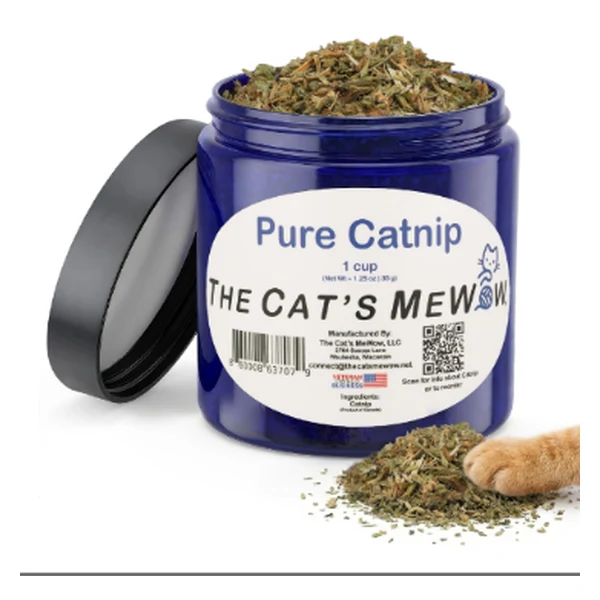
The Cat's MeWow 100% Pure Catnip
North American grown single-ingredient catnip packed in a UV-blocking freshness jar with a strong nepetalactone aroma that instantly revives old toys.
Why It's Essential for DIY Crafts: A DIY sock toy or cardboard roller is only as captivating as its scent profile. Most grocery store catnip is full of dry stems, dusty filler, and has lost its volatile oils after sitting on warehouse shelves for months. The Cat's MeWow is single-ingredient, responsibly grown on trusted North American farms, and sealed in an airtight, light-blocking blue jar that preserves the active essential oil (nepetalactone). Just one tablespoon tucked into your no-sew sock mouse or sprinkled over a cardboard puzzle box sends 70% of adult cats into blissful rolling and play zoomies.

Radix Rope Natural Jute Twine (8mm × 50ft)
Pet-safe, heavy-duty 8mm thick untreated jute rope roll. Ideal for refurbishing cat trees, wrapping wine cork rollers, and creating durable scratching posts.
Why It's Essential for DIY Crafts: When crafting climbing posts or wrapping kicker toys, standard hardware store cordage is dangerous because industrial manufacturing often treats twine with mineral oils, diesel lubricants, and chemical pest repellents. Radix Rope is specifically produced with 100% natural, untreated, biodegradable jute fibers with zero chemical odor. At a sturdy 8mm diameter, it provides the coarse, fibrous texture cats instinctively need to shed their outer claw sheaths. It's also ideal if you need to re-wrap frayed scratching posts on your small-space cat trees without replacing the entire furniture unit.

Gochanmon Natural Silvervine Stick & Catnip Ball (2-Pack)
Artisan handmade cage crafted from real Matatabi silvervine chew sticks enclosing an internal compressed catnip ball and gentle jingle bell. Promotes dental hygiene.
Why It's the Best Premade Natural Alternative: If your cat is among the ~30% of felines that don't respond to traditional catnip, silvervine (Actinidia polygama, or Matatabi) is a game-changer. Scientific studies reveal that nearly 80% of cats respond to silvervine, including many catnip non-responders. The Gochanmon 2-pack combines raw natural silvervine chew sticks formed into a geometric polyhedral ball, with a compressed catnip ball and bell safely secured inside. As cats gnaw and lick the silvervine bark, the natural wood fibers gently scrape away plaque and tartar buildup from their molars, providing oral hygiene along with hours of bat-and-chase fun.
DIY Toys vs. Electronic Fitness Toys: Finding the Balance
While homemade natural toys satisfy a cat's sensory, tactile, and problem-solving drives, high-energy indoor cats also benefit from unpredictable automated movement. Self-moving robotic toys and motorized feather wands trigger predatory chase sequences when you're away at the office or busy working from home.
The secret to a calm, fulfilled indoor feline is blending both worlds: provide DIY treat puzzle boxes and natural cork rollers for relaxed independent sniffing and problem-solving, and complement them with interactive motorized toys (such as those featured in our roundup of the best indoor cat fitness toys of 2026) for high-octane cardio workouts.
Furthermore, maintaining clean and stress-free territory is fundamental. Cats that are bored or anxious often express stress through litter box avoidance or destructive furniture scratching. Pairing engaging DIY foraging boxes with an ultra-clean automated litter box setup (see our in-depth test of the Litter-Robot 4 and our complete automatic litter box comparison guide) ensures your home stays fresh and your cat feels secure.
The "Toy Rotation" Strategy: Eliminate Boredom Forever
Have you ever noticed your cat ignoring a toy after just two days? Cats experience habituation—they quickly memorize stationary objects in their territory, and once an item stops presenting new sensory data, it loses all prey value.
To keep DIY and natural toys perpetually exciting without spending extra money, adopt the 3-3-3 Toy Rotation Rule:
- Keep Only 3 Toys Active: At any given time, keep no more than 2 or 3 small toys available on the floor (e.g., 1 cardboard puzzle box, 1 cork roller, and 1 sock kicker).
- Store the Rest in a "Recharge Jar": Take an airtight mason jar, sprinkle a tablespoon of The Cat's MeWow pure catnip at the bottom, and place inactive toys inside. Over 5 to 7 days, the dry paper, wood, and cotton will absorb the fragrant nepetalactone oils.
- Rotate Every Sunday: Swap the floor toys with the jarred toys once a week. When you drop a "recharged" sock mouse or paper fish onto the rug, your cat will treat it like an entirely brand-new kill!
Frequently Asked Questions
Are homemade cardboard cat toys safe for indoor cats?
Yes. Plain unbleached corrugated cardboard is completely non-toxic and digestible in micro-quantities if your cat accidentally swallows a fleck while tearing. Always peel away plastic packaging tape, clear shipping labels, and metal carton staples before letting your cat play.
What household craft items are dangerous for cats?
Never give your cat rubber bands, hair elastics, tinsel, floral wire, or loose strings without direct hands-on supervision. Ingested linear foreign bodies are one of the most dangerous, expensive veterinary emergencies. In addition, avoid synthetic glue guns and plastic googly eyes.
What type of rope is safe for homemade cat scratchers and toys?
Only use 100% untreated natural plant fiber rope, such as natural jute twine or unoiled sisal rope (like Radix 8mm natural jute). Avoid standard construction-grade ropes from big-box stores, as they are routinely treated with petroleum oils and chemical pesticides.
How often should I replace DIY natural cat toys?
Inspect homemade toys weekly. Discard paper and cardboard toys once they become heavily chewed, soggy from saliva, or crushed flat. Fabric sock toys can be laundered in fragrance-free pet detergent, dried thoroughly, and re-stuffed with fresh catnip every few months.
Why does my cat prefer household items over expensive store-bought toys?
Household items like cardboard, crumpled paper, and natural cork have textures, weights, and crinkly acoustic frequencies that closely match real small prey animals in the wild. Many commercial plastic toys are too heavy, noisy in an unnatural way, or coated with chemical plasticizers that repulse feline olfactory receptors.
Ready to Craft Your Cat's Next Favorite Toy?
Start by cutting a few holes in your next delivery box, or grab pure organic catnip and natural jute cord to build toys that keep your cat agile, happy, and mentally sharp.
Get Pure Catnip on Amazon →