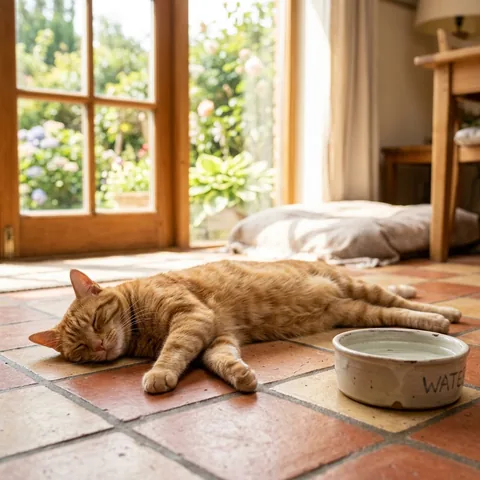
Why Summer Heat Is More Dangerous for Cats Than You Think
Every summer, veterinary emergency rooms see a predictable spike in feline heat stroke cases. What makes this so alarming is that most of these cases are entirely preventable — and many cat owners don't realize their cat is at risk until it's too late.
Unlike dogs, cats rarely pant. They regulate body temperature primarily through grooming (saliva evaporation) and seeking cooler surfaces. When the ambient temperature exceeds their ability to cool down, their core body temperature rises rapidly. A cat's normal temperature is between 100.5°F and 102.5°F. Once it hits 104°F, they are in danger. At 106°F or higher, organ damage begins, and heat stroke can become fatal within minutes.
Indoor cats are not immune. A closed room without air conditioning, a sunroom with no ventilation, or a carrier left in a warm car for even 10 minutes can push temperatures into the danger zone.
Here are 15 essential, vet-recommended tips to keep your cat safe this summer.
Know the Warning Signs First
Before diving into prevention, you need to know what heat stress looks like in cats. Unlike dogs, cats don't pant until they are already in distress.
Early warning signs:
- Restlessness and pacing
- Excessive grooming (attempting to cool down)
- Sweaty paw pads (cats only sweat through their paws)
- Seeking cool surfaces like tile floors, sinks, or bathtubs
Serious heat stroke symptoms (requires immediate veterinary attention):
- Open-mouth panting or rapid breathing
- Drooling or foaming at the mouth
- Bright red gums and tongue
- Lethargy, stumbling, or inability to stand
- Vomiting or diarrhea
- Collapse or seizures
If you see any of the serious symptoms, this is an emergency. Move your cat to a cool area, apply lukewarm (not cold) water to their fur, and get to a vet immediately.
15 Tips to Prevent Cat Heat Stroke This Summer
1. Keep Fresh Water Available at All Times
This sounds obvious, but dehydration is the number one contributor to heat stroke in cats. Place multiple water bowls throughout your home. Cats are more likely to drink when water is easily accessible in every room they frequent.
Pro tip: Add ice cubes to the water bowl on extremely hot days. Many cats are fascinated by the floating ice and will drink more as a result.
2. Invest in a Cat Water Fountain
Cats instinctively prefer running water over stagnant water. A recirculating water fountain encourages significantly higher water intake. Studies show cats with fountains drink up to 50% more water than cats with bowls alone.
3. Never Leave Your Cat in a Parked Car
This applies even on mildly warm days. On a 75°F day, the interior of a car can reach 100°F in just 10 minutes and 120°F within 30 minutes. There is no safe amount of time to leave a cat in a parked vehicle during summer — not even with the windows cracked.
4. Create Cool Retreat Zones
Designate at least one room in your home as a "cool zone." This should be a room with tile or hardwood floors (not carpet), good ventilation or air conditioning, and limited direct sunlight. Close the blinds or curtains during peak sun hours (10 AM to 4 PM).
Many cats naturally seek out bathrooms and kitchens during hot weather because of the tile floors. Make sure they have access to these rooms.
5. Use Fans Strategically
Fans alone don't cool cats the way they cool humans (cats don't sweat through their skin). However, a fan placed near a cool, damp towel or a frozen water bottle creates a makeshift evaporative cooler that can lower the ambient temperature in a small area by several degrees.
6. Provide Elevated Cooling Mats
Gel-based cooling mats designed for pets provide a cool surface for your cat to lie on without any electricity. Place them in your cat's favorite resting spots. Alternatively, a damp towel placed on a tile floor works in a pinch.
7. Freeze Treats and Wet Food
Freeze small portions of your cat's favorite wet food or tuna water in an ice cube tray. These "pupsicles" (or should we say "catsicles") provide hydration, mental enrichment, and a cooling snack all in one.
8. Adjust Feeding Times
On extremely hot days, shift meals to early morning and late evening when temperatures are lower. Cats are naturally crepuscular (most active at dawn and dusk), so this aligns with their biological rhythm and reduces the metabolic heat generated by digestion during the hottest hours.
9. Groom Long-Haired Cats More Frequently
A matted coat traps heat against the skin and prevents air circulation. Regular brushing removes loose undercoat fur and allows air to reach the skin. However, do not shave your cat. A cat's coat actually insulates against both heat and cold, and shaving removes their UV protection.
10. Limit Playtime During Peak Heat
Save interactive play sessions (wand toys, laser pointers, fetch) for early morning or after sunset. Vigorous exercise during the hottest part of the day raises your cat's core temperature and increases their risk of overheating.
11. Monitor Brachycephalic Breeds Closely
Flat-faced breeds like Persians, Himalayans, and Exotic Shorthairs are at significantly higher risk of heat stroke. Their shortened airways make it harder for them to regulate body temperature through panting. These breeds need extra vigilance, cooler environments, and should never be left in warm rooms without ventilation.
12. Check on Senior and Overweight Cats
Older cats and overweight cats are less efficient at regulating their body temperature. Senior cats may also have underlying kidney or heart conditions that worsen in the heat. Check on them more frequently during heat waves, and ensure they have easy access to water and cool surfaces without needing to climb stairs or jump.
13. Keep the Litter Box in a Cool Location
Many cat owners keep litter boxes in garages, laundry rooms, or sunrooms — places that can become dangerously hot in summer. If your cat avoids the litter box during hot days, temperature may be the reason. Move it to a cooler, well-ventilated area.
14. Apply a Damp Cloth to Their Fur
If your cat seems warm, gently wipe their fur with a damp (not cold) cloth, focusing on the paw pads, belly, and inner ears. These areas have the thinnest fur and the most blood flow near the surface, making them the most effective cooling points.
Important: Never use ice-cold water or ice packs directly on a cat's skin. Extreme cold causes blood vessels to constrict, which actually traps heat inside the body and makes the situation worse.
15. Know Your Emergency Plan
Despite your best efforts, accidents happen. Know the location and phone number of your nearest emergency veterinary clinic. Keep a pet first aid kit accessible. And remember the emergency cooling protocol:
- Move the cat to a cool, shaded area immediately.
- Apply lukewarm water to their fur (not ice cold).
- Place a fan near them to promote evaporation.
- Offer small sips of cool water (do not force them to drink).
- Transport to a vet as quickly as possible, even if they seem to improve.
Cats at Highest Risk
While any cat can suffer from heat stroke, certain groups are more vulnerable:
| Risk Factor | Why It Increases Risk |
|---|---|
| —- | —- |
| Brachycephalic breeds (Persian, Himalayan, Exotic Shorthair) | Shortened airways reduce cooling efficiency |
| Senior cats (10+ years) | Reduced thermoregulation and possible underlying conditions |
| Overweight cats | Extra insulation and higher metabolic heat production |
| Long-haired breeds (Maine Coon, Ragdoll, Norwegian Forest Cat) | Dense coats trap heat |
| Cats with heart or respiratory conditions | Compromised circulation reduces cooling ability |
| Dark-coated cats | Absorb more heat from sunlight |
| Outdoor cats without shade access | Direct sun exposure with no escape |
The Bottom Line
Cat heat stroke is a medical emergency that kills quickly — but it is almost always preventable. The key is recognizing that cats hide discomfort exceptionally well. By the time your cat is panting with red gums, they are already in crisis.
Start with the basics: fresh water everywhere, cool retreat zones, and awareness of the warning signs. Adjust your routine during heat waves. And if your cat is in a high-risk group, take extra precautions.
A few simple changes to your summer routine can be the difference between a relaxed, comfortable cat and a life-threatening emergency.
How do you keep your cat cool during summer? Share your best tips in the comments below!