Affiliate Disclosure: This post contains affiliate links. If you purchase through our links, we may earn a small commission at no additional cost to you. We only recommend veterinarian-backed products tested for safety, comfort, and feline wellness.
In the wild, felines occupy a unique ecological niche: they are both apex predators and small prey. Because showing weakness, pain, or fear invites attacks from larger predators, domestic cats retain an ancient evolutionary instinct known as masking. When a cat feels physically unwell or emotionally overwhelmed, their first biological impulse is not to complain or vocalize—it is to disappear into a secure, inaccessible bunker.
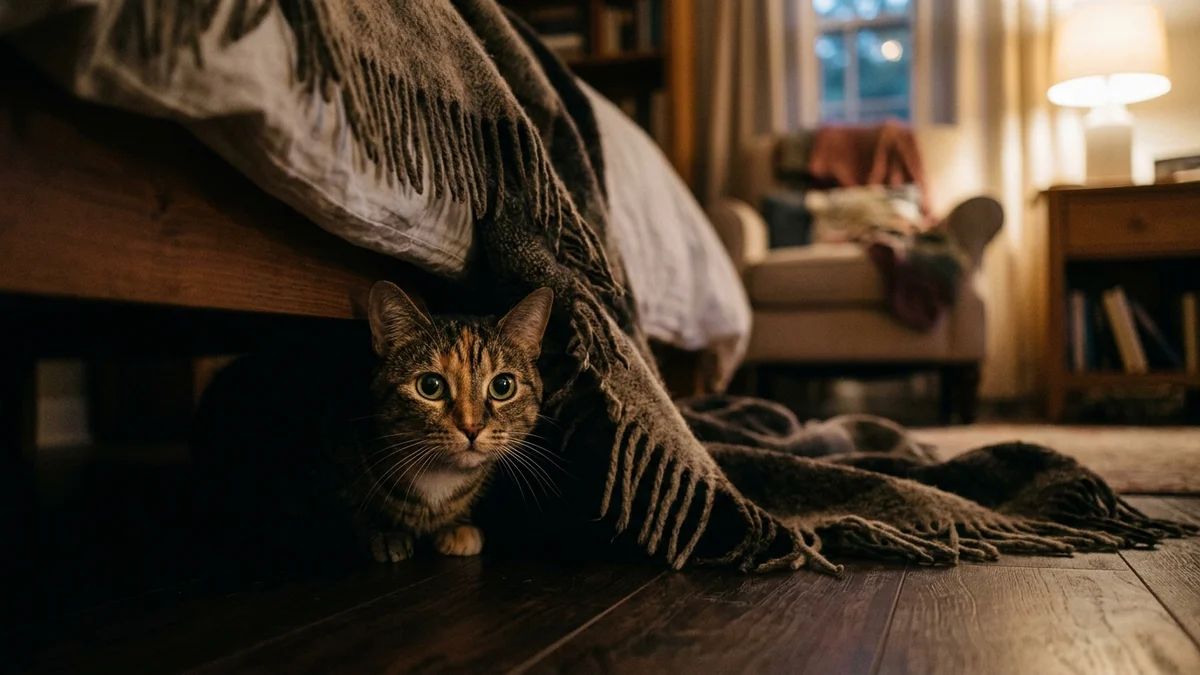
Whether your cat is hiding under the bed all of a sudden or retreating into dark laundry baskets, distinguishing between acute environmental stress and an underlying medical condition is essential. Below, we examine the seven subtle behavioral signs that separate stress from medical illness, identify non-negotiable veterinary red flags, and highlight proven calming solutions to restore your cat's sense of security.
Stress vs. Illness: The Key Differences
When investigating your cat's sudden change in demeanor, your first diagnostic question must always be: Is this situational, or is this systemic?
Environmental & Behavioral Stress
Stress-induced hiding is almost always triggered by a disruption in your cat's sensory map. Common catalysts include:
- Household Changes: Rearranged furniture, new houseguests, crying babies, or ongoing home renovations and contractor noise.
- Unfamiliar Smells: Bringing home luggage from travel, using harsh new chemical cleaners, or carrying the scent of an outside animal.
- Inter-Cat Conflict: Silent intimidation around food bowls or litter boxes from another territorial pet in a multi-cat home.
- Loud Acoustic Shocks: Thunderstorms, neighborhood fireworks (see our guide on calming treats for fireworks anxiety), or street construction.
Underlying Medical Illness or Pain
If your home environment has remained completely peaceful and unchanging, sudden hiding is often a cry for help caused by internal discomfort, such as:
- Feline Lower Urinary Tract Disease (FLUTD): Painful bladder inflammation, urinary tract infections (UTIs), or sterile cystitis.
- Osteoarthritis & Joint Pain: Common in senior cats who hide because jumping onto familiar couches or climbing into tall litter boxes now causes agonizing ache.
- Dental Resorption & Stomatitis: Severe tooth rot or gum inflammation that makes eating excruciating.
- Systemic Disorders: Fever, chronic kidney disease (CKD), pancreatitis, or gastrointestinal obstruction.
7 Subtle Signs to Watch For
Pay close attention to these seven diagnostic clues to pinpoint the true meaning behind your cat's retreat:
1. Appetite Clues: Hiding While Eating vs. Not Eating
A classic query veterinarians hear is: "My cat is hiding but still eating and drinking water—is that normal?" If your feline sneaks out from under the sofa to scarf down dinner when the room is quiet, the trigger is usually environmental fear or temporary anxiety. Conversely, if your cat is hiding under the bed and refuses to eat for more than 24 hours, this is an immediate veterinary red flag. Fasting cats can rapidly develop hepatic lipidosis (fatty liver disease), a life-threatening metabolic complication.
2. Litter Box Habits & Straining
Never ignore the litter box when a cat begins hiding. If your cat makes frequent trips to their box, squats repeatedly without producing urine, or cries while attempting to eliminate, treat this as a Tier-1 medical emergency. In male cats, a urethral plug or urinary crystal blockage is 100% fatal within 48 to 72 hours without catheterization. Modern health-monitoring self-cleaning boxes, like the Litter-Robot 4, track individual visit frequency and duration to help parents catch these subtle early warnings before they escalate (read our full automatic litter box comparison guide for multi-cat tracking).
3. Hunched Posture, Squinting, & the "Pain Purr"
When stressed, a hiding cat usually adopts an alert, vigilant posture: wide dilated pupils, ears swiveling, and muscles tensed to sprint. However, when sick or in physical pain, cats adopt the diagnostic meatloaf crouch—hunched tightly with their head pulled low, eyes half-closed or grimacing, and front paws tucked completely beneath the chest. Crucially, cats also purr when in extreme distress to self-soothe through endorphin release; a purring cat hiding in a dark closet is often masking acute pain, not feeling content.
4. Grooming Extremes: Neglect vs. Obsessive Licking
Look closely at your cat's coat when they emerge. A sick cat will quickly stop grooming, resulting in a dull, greasy, unkempt coat with dandruff along the spine. On the flip side, chronic feline stress and idiopathic cystitis often manifest as psychogenic alopecia—obsessive, compulsive over-grooming where the cat literally licks their belly, inner thighs, or forearms completely bald.
5. Nocturnal Emergence: Hiding by Day, Active by Night
Does your cat hide in dark places all day and only creep out after midnight? This pattern almost always signals social intimidation or sensory overload. The daylight hours bring foot traffic, children, loud appliances, and daylight glare. At night, the home becomes quiet and predictable, giving an anxious cat the confidence to eat, drink, and patrol their territory without perceived threats.
6. Defensive Retreat When Approached
How does your cat react when you gently kneel near their hiding spot? A stressed but healthy cat may lean into a soft finger sniff or gently purr when spoken to in a quiet tone. A sick or injured cat in pain will often lean away, flatten their ears, emit a low growl or hiss, or tuck their tail tightly to protect vulnerable organs from human contact.
7. Vocalization Shift: Unnatural Silence or Mournful Yowling
A normally vocal, chatty cat who suddenly goes stone-silent is usually prioritizing defensive camouflage. Conversely, sudden low-pitched, repetitive yowling (often called a caterwaul) emanating from beneath the bed or behind the bathroom door frequently indicates intense abdominal cramping, cognitive disorientation, or hypertension.
Proven Comfort Solutions: Calming Beds, Pheromones, & Perches
Once medical issues are ruled out by your veterinarian, supporting an anxious cat requires optimizing their home territory. Below are three veterinary-recommended calming tools designed to reduce cortisol and provide secure micro-territories:
| Product | Type | Key Benefit | Action |
|---|---|---|---|
| FELIWAY Optimum Diffuser Kit | Pheromone Diffuser | Advanced feline pheromone complex to curb hiding & stress | View on Amazon |
| Crispedia Foldable Cat Cave House | Enclosed Hideaway Bed | Dual-tier private cave with scratch pad & peek window | View on Amazon |
| TWDEPART Compact Cat Tree Tower | Elevated Perch / Tree | Low-profile observation bed + sisal ramp for vertical confidence | View on Amazon |

FELIWAY Optimum Enhanced Pheromone Diffuser
Next-generation patented feline pheromone complex that delivers enhanced calming messages to reduce sudden hiding, territorial conflict, and urine spraying.
Why It Helps Hiding Cats: When cats feel safe in their territory, they rub their cheeks against doorframes and furniture, depositing calming facial pheromones that signal: "This space is secure." Environmental changes erase those scent markers, making your cat feel exposed. FELIWAY Optimum mimics these natural bio-markers with an enhanced synthetic pheromone blend. Plugging the diffuser into the room where your cat retreats helps re-establish a continuous aura of safety, visibly reducing hiding frequency within 7 to 14 days.

Crispedia Large Foldable Cat Bed Cave House
Spacious 16" × 16" × 13" enclosed micro-haven featuring an ultra-soft fleece-lined interior, sturdy reinforced walls, side sisal scratch board, and top observation deck.
Why It Helps Hiding Cats: Anxious cats retreat under beds and into tight closet corners because solid walls protect their back and flanks from surprise approaches. The Crispedia Cat Cave provides that exact structural sanctuary without trapping dust or making monitoring difficult. It gives your cat an intentional, comfortable sanctuary where they feel 100% shielded, while the top cushioned platform allows them to transition into open-room observation as their confidence grows.

TWDEPART Compact Cat Tree Tower with Perch
Low-profile activity centre offering a deep bolstered sleeping rim, wide natural sisal scratching ramp, and interactive feather teasers for compact rooms.
Why It Helps Hiding Cats: Cats that hide on floor level often feel cornered. Providing vertical vantage points—even a compact, low-profile perch like the TWDEPART—dramatically shifts their mental state from victim to observer. Being just 20 to 30 inches off the ground allows a nervous feline to survey their surroundings safely without feeling exposed. (For tighter living rooms or rental studios, explore our full review of the best cat trees for small apartments).
How to Help a Hiding Cat: The 4-Step Recovery Protocol
When rehabilitating a cat that has retreated into hiding, follow these veterinary behavioral guidelines:
- Never Drag or Force Them Out: Forcibly removing a hiding cat spikes their heart rate, triggers panic, and can result in defensive scratches or bites. Let them control when they emerge.
- Bring Resources Closer: Move their water bowl, food dish, and an extra litter tray into the same room as their hiding spot. A terrified cat will often starve or hold their bladder rather than cross a scary hallway.
- Establish Predictable Quiet Times: Visit their room twice daily, sit quietly on the floor at a non-threatening angle, and read out loud in a soothing, conversational tone for 10 minutes without attempting to touch them.
- Use Low-Stress Interactive Play: Once they show interest, gently wiggle a feather wand or roll a soft toy (like the lightweight picks in our indoor cat fitness toys guide) just outside their hiding perimeter to re-engage their predatory focus.
Frequently Asked Questions
Why is my cat hiding under the bed all of a sudden?
Sudden hiding under beds or furniture is typically triggered either by acute environmental stress (loud noises, home changes, new pets) or hidden physical pain. Because cats are masking prey animals, hiding is their primary instinct when feeling vulnerable.
My cat is hiding but still eating and drinking water. Should I be worried?
If your cat continues to eat, drink, and use their litter box normally, the cause is far more likely emotional anxiety, fear, or a temporary environmental shock rather than an acute medical emergency. However, monitor them closely for 48 hours to ensure appetite doesn't drop.
When does cat hiding behavior become an emergency?
Seek immediate veterinary care if hiding is accompanied by not eating for over 24 hours (risk of hepatic lipidosis), straining or crying in the litter box (deadly urinary blockage), open-mouth breathing, repeated vomiting, or extreme lethargy.
Should I pull my hiding cat out from under the bed?
No. Forcibly pulling a frightened cat out from under furniture destroys their sense of safety, skyrockets adrenaline, and damages the bond between you and your pet. Allow them to emerge on their own timeline while ensuring nearby access to food, water, and litter.
Need to Re-Establish a Calming Atmosphere?
Explore veterinary-recommended pheromone diffusers and cozy enclosed sanctuaries to help your cat transition from frightened to fearless.
View FELIWAY Optimum on Amazon →