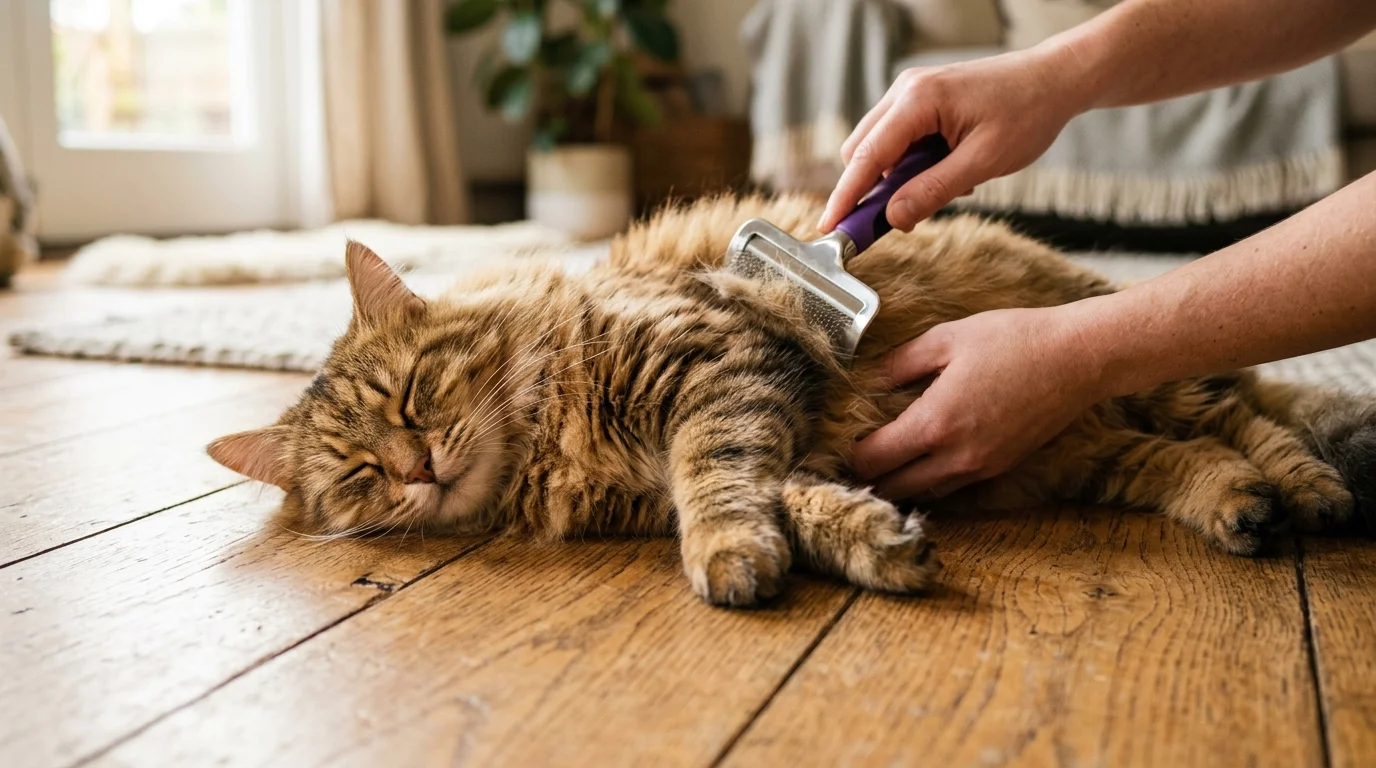
Cats spend up to 30% of their waking hours grooming themselves. While self-grooming keeps their coat clean, it causes two major problems for owners: constant fur on furniture and uncomfortable hairballs in the digestive system.
Using a specialized tool like the FURminator De-Shedding Tool alongside proper nutrition can cut loose undercoat shedding by up to 90%. Combine good coat care with a clean indoor cat environment and a self-cleaning litter box for an effortless home routine.
4 Steps to Control Heavy Cat Shedding
- Undercoat De-Shedding (Weekly): Use a fine stainless steel de-shedding tool to reach past topcoat guard hairs and extract dead undercoat fur.
- Slicker Brushing (Daily): A soft slicker brush removes loose surface fur and prevents painful mats.
- Omega-3 Fish Oil Supplements: Adding EPA & DHA fatty acids reduces dry, flaky skin and strengthens hair follicles.
- Hydration Boost: Dehydrated skin sheds more fur. Ensure your cat drinks clean water using a cat water fountain.
Frequently Asked Questions
How often should you de-shed a cat?
For short-haired cats, 1–2 times per week is ideal. Long-haired breeds benefit from daily brushing and a 2–3 times weekly undercoat de-shedding routine.
Do de-shedding tools hurt a cat's skin?
When used correctly without excessive pressure, stainless steel de-shedding edges reach beneath topcoat guard hairs to remove loose undercoat without scratching skin.
Final Thoughts
A consistent grooming schedule keeps your home fur-free and protects your cat from painful hairballs. Read our full FURminator review or explore our cat allergy guides for more care tips.