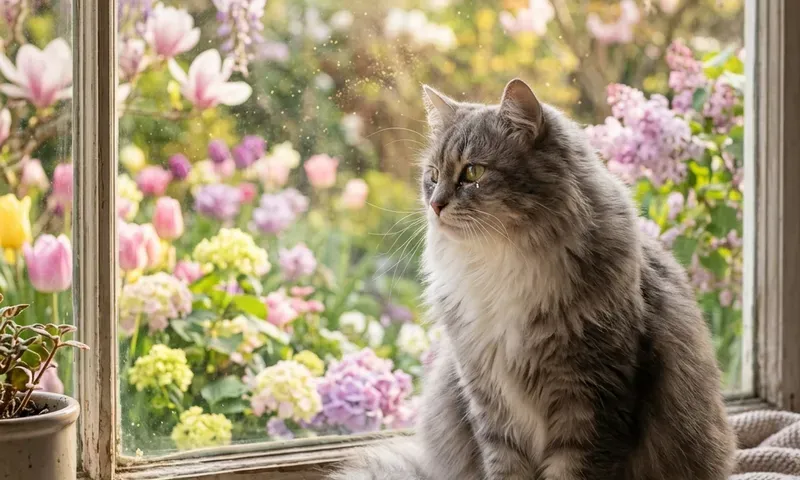
Spring is here, and your cat is suddenly scratching non-stop, sneezing in clusters, or developing bald patches. Sound familiar? Seasonal allergies affect an estimated 10–15% of cats, and spring is the worst season for flare-ups. The good news: once you identify the triggers, most cases are manageable at home.
Can Cats Actually Get Seasonal Allergies?
Yes — and they're more common than most owners realize. While humans get watery eyes and runny noses, cat allergies typically show up on the skin. This condition is called atopic dermatitis (or atopy), and it's triggered by the same environmental allergens that affect us: pollen, mold spores, dust mites, and grass.
Unlike food allergies (which persist year-round), seasonal allergies follow a predictable pattern. They flare up in spring and fall when pollen counts spike, and calm down in winter. If your cat's symptoms started appearing in April or May and weren't there in January, you're almost certainly looking at seasonal allergies.
7 Signs Your Cat Has Spring Allergies
Cats can't tell you they feel miserable, but their bodies give clear signals:
- Excessive scratching — especially around the head, ears, neck, and base of the tail. This is the #1 sign.
- Over-grooming — licking the belly, inner thighs, or paws until fur falls out. Look for symmetrical bald patches.
- Red, inflamed skin — check inside the ears, between the toes, and under the chin.
- Sneezing fits — 3–5 sneezes in a row, especially after being near open windows.
- Watery or crusty eyes — clear discharge is usually allergies; yellow or green means infection.
- Ear infections — head shaking, dark waxy buildup, or scratching at ears repeatedly.
- Chin acne — small black dots or bumps on the chin, often worse in spring.
Important: If you notice any of these signs, rule out fleas first. Flea allergy dermatitis looks nearly identical to seasonal allergies and is far more common. Check for flea dirt (tiny black specks) by combing your cat with a fine-tooth flea comb over a white paper towel.
Common Spring Allergens for Cats
Your cat doesn't need to go outside to be affected. These allergens enter your home through open windows, on your clothes, and on your shoes:
- Tree pollen (oak, birch, cedar) — peaks March through May
- Grass pollen — peaks May through July
- Mold spores — spike after spring rain
- Dust mites — thrive in warming temperatures
- Flower pollen — from bouquets brought indoors (lilies are toxic to cats — never bring them inside)
Vet-Approved Treatment Options
Treatment depends on severity. Here's what veterinary dermatologists typically recommend, from mildest to most aggressive:
Mild Cases: Home Management
- Omega-3 fatty acid supplements (fish oil) — strengthens the skin barrier and reduces inflammation. This is the single most effective over-the-counter option. Look for supplements with EPA and DHA specifically formulated for cats.
- Medicated baths with oatmeal or chlorhexidine shampoo — soothes itchy skin and removes surface allergens. Once weekly during peak season.
- Paw wipes — wipe your cat's paws when they come inside to remove pollen.
Moderate Cases: Prescription Medications
- Antihistamines (cetirizine/Zyrtec is most commonly prescribed for cats) — works for about 30% of allergic cats. Your vet will determine the correct dosage.
- Apoquel (oclacitinib) — originally for dogs but increasingly used off-label in cats. Targets the itch pathway directly.
- Cyclosporine (Atopica) — immunosuppressant that reduces allergic reactions. Very effective but takes 4–6 weeks to kick in.
Severe Cases: Advanced Therapy
- Allergy testing (intradermal skin test or blood test) — identifies your cat's specific allergens.
- Immunotherapy (allergy shots) — custom-formulated injections that desensitize your cat over time. 60–80% success rate. This is the only treatment that addresses the root cause rather than just symptoms.
- Short-term steroids (prednisolone) — fast relief for severe flare-ups, but not safe for long-term use due to side effects.
Never give your cat human allergy medication without consulting your vet. Many common antihistamines contain ingredients that are toxic to cats (diphenhydramine combined with decongestants, for example).
7 Ways to Allergy-Proof Your Home
Reducing allergen exposure is just as important as medication:
- Run a HEPA air purifier in the rooms where your cat spends the most time. This removes up to 99.97% of airborne pollen and mold spores.
- Keep windows closed during high pollen days. Check local pollen counts at pollen.com before opening windows.
- Wash bedding weekly — both yours and your cat's. Hot water (130°F+) kills dust mites.
- Vacuum with a HEPA filter at least twice weekly. Pollen settles into carpet and upholstery fast.
- Clean the litter box more frequently — dust from litter aggravates respiratory allergies. Consider switching to a low-dust litter.
- Wipe your cat down with a damp cloth or pet-safe wipe after outdoor time to remove pollen from their coat.
- Remove shoes at the door — your shoes track pollen, mold, and grass allergens throughout the house.
Indoor vs. Outdoor Cats: Who Gets It Worse?
You might assume outdoor cats have worse allergies, but it's not always the case. Indoor cats are constantly exposed to dust mites, mold in damp areas, and concentrated airborne allergens in closed spaces. Outdoor cats have higher pollen exposure but often develop some natural tolerance through constant low-level contact.
The worst-case scenario? Cats that go in and out — they bring fresh pollen into a closed environment, creating a concentrated allergen load indoors. If your cat has allergies, consider setting up a dedicated indoor environment with air filtration during peak pollen season.
When to See the Vet
Schedule a vet appointment if:
- Your cat is scratching to the point of creating open wounds or scabs
- You see hair loss in patches
- The ears have dark discharge or your cat keeps shaking their head
- Eyes have yellow or green discharge (possible secondary infection)
- Home remedies haven't improved symptoms after 2 weeks
- Your cat is lethargic or eating less
Secondary bacterial or yeast infections from constant scratching are very common and require antibiotics or antifungals — these won't clear up on their own.
The Allergy-Friendly Cat Care Routine
Here's a simple daily routine for managing a cat with spring allergies:
- Morning: Administer any prescribed medication. Check pollen forecast — keep windows closed on high days.
- Afternoon: Quick paw wipe if your cat goes outside. Run HEPA purifier.
- Evening: Omega-3 supplement with dinner. Quick ear and skin check.
- Weekly: Wash cat bedding in hot water. Vacuum all rooms with HEPA filter. Optional medicated bath.
The Bottom Line
Spring cat allergies are frustrating but highly manageable. Start with environmental controls (air purifier, closed windows, frequent cleaning), add omega-3 supplements, and see your vet if symptoms persist beyond two weeks. Most cats respond well to a combination of allergen reduction and medication, and many outgrow the worst of their symptoms as their immune system adapts over time.
Keep your cat's overall health strong with proper hydration from a quality water fountain, a nutritious diet, and regular vet checkups. A healthy cat handles allergens far better than one that's already stressed or under-nourished.