If you just bought an automatic self-cleaning litter box, congratulations — you're about to reclaim a lot of time and enjoy a much fresher home. But there's one hurdle many new owners face: getting their cat to actually use it.
Cats are creatures of habit, and a big, unfamiliar machine sitting where their old litter box used to be can be intimidating. The good news? With the right approach, most cats adapt within 1–2 weeks. Here's exactly how to make the transition smooth and stress-free.
Step 1: Keep the Old Box Available
This is the most important rule. Don't throw away your old litter box on day one. Place the new automatic box right next to the existing one. Your cat needs to investigate the new box on their own terms while still having a "safe" option available.
Leave both boxes side by side for at least 5–7 days. Most cats will start exploring the new box out of curiosity within the first 48 hours.
Step 2: Use Familiar Litter
Use the exact same litter brand and type in your new automatic box. Cats recognize their litter by texture and smell. If you switch to a new litter AND a new box at the same time, you're doubling the unfamiliarity.
If your automatic box requires a specific litter type (like crystal litter for the PetSafe ScoopFree SmartSpin), make this transition gradually by mixing a small amount into the old litter first.
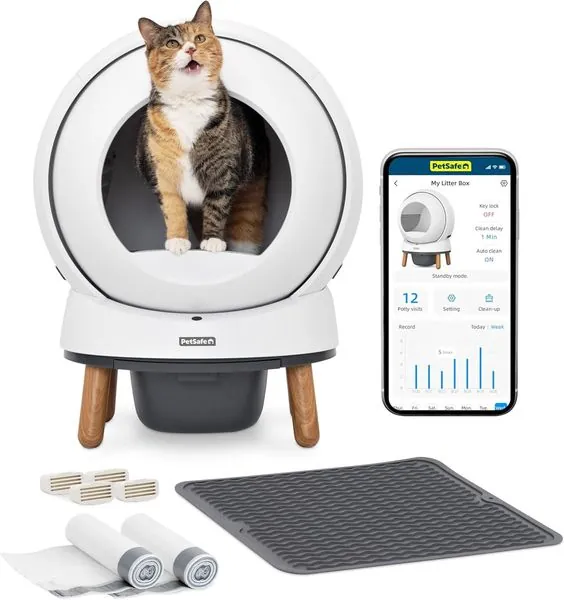
PetSafe ScoopFree SmartSpin
Uses crystal litter trays — great for first-time automatic box owners
Step 3: Turn Off the Cleaning Cycle Initially
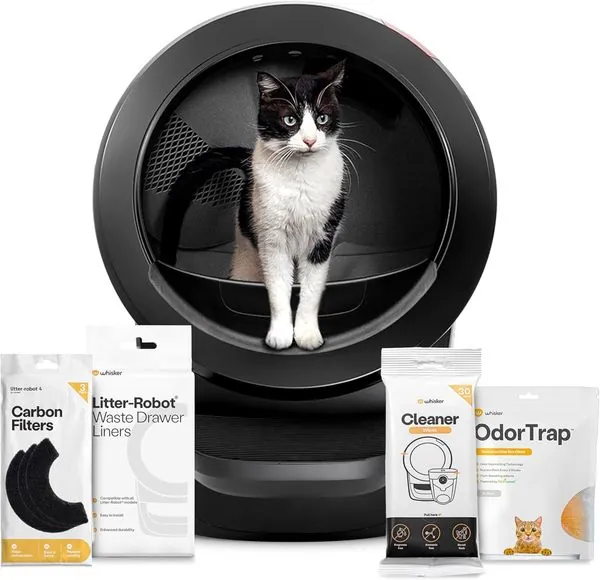
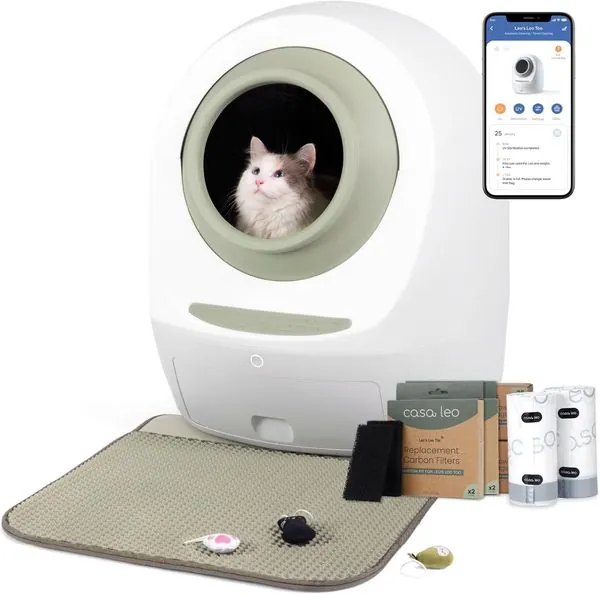
Most automatic litter boxes like the Litter-Robot 4, PETKIT PuraMax 2, and Casa Leo Leo's Loo Too have a manual mode or the ability to disable the automatic cleaning cycle. Use it.
For the first 3–5 days, keep the automatic cleaning turned off. Let your cat use it as a "normal" litter box first. The motor sounds and rotating movements can startle cats who aren't expecting them.
Step 4: Introduce the Cleaning Cycle Gradually
Once your cat is comfortably using the new box (you'll know because the old box stays clean), turn on the automatic cleaning cycle. Most modern boxes like the Litter-Robot 4 have a delay timer — set it to the longest delay possible so the cleaning doesn't start while your cat is still nearby.
Watch your cat's reaction the first few times. Some cats are curious and watch the cycle. Others bolt. Both reactions are completely normal. The key is that they return to use the box again afterward.
Step 5: Remove the Old Box
After your cat has been consistently using the new automatic box for at least 3–5 days with the cleaning cycle active, you can remove the old litter box. Do this gradually if your cat is particularly anxious — move the old box further away each day before removing it entirely.
Common Mistakes to Avoid
- Forcing your cat into the new box. Never physically place your cat inside the automatic litter box. This creates negative associations and can set back the entire transition.
- Removing the old box too soon. Patience is everything. Rushing this process is the #1 reason transitions fail.
- Placing the box in a new location. Keep the new box in the same spot as the old one. Moving the location AND changing the box is too much change at once.
- Using scented litter or attractants. Skip the litter attractant sprays. They can actually deter some cats. Unscented, clumping clay litter works best with most automatic boxes.
- Ignoring the waste drawer. Even automatic boxes need maintenance. Empty the waste drawer regularly — a full drawer can cause odors that make cats avoid the box.
What If My Cat Refuses to Use It?
If it's been more than two weeks and your cat is still avoiding the automatic box, try these fixes:
- Place a small amount of used litter from the old box into the new one. The familiar scent signals that this is an acceptable bathroom spot.
- Make sure the entry opening is large enough for your cat. Some cats, especially larger breeds, need more room. The Litter-Robot 4 has one of the largest openings on the market.
- Check the box's location. Cats need a quiet, low-traffic spot. Avoid placing it next to the washing machine, dryer, or in a noisy hallway.
Litter-Robot 4
Largest entry opening, whisper-quiet cleaning — easiest transition for hesitant cats
Multi-Cat Household Tips
If you have multiple cats, the transition can take slightly longer. Here's what works:
- Keep the one-box-per-cat-plus-one rule during the transition. If you have two cats, keep three boxes available (two old, one new) until both cats are using the automatic box.
- Alpha cats typically investigate and adopt new boxes first. Once one cat uses it, the others usually follow within days.
- Models like the PETKIT PuraMax 2 and the Litter-Robot 4 are specifically designed for multi-cat homes and can handle up to 3–4 cats each.
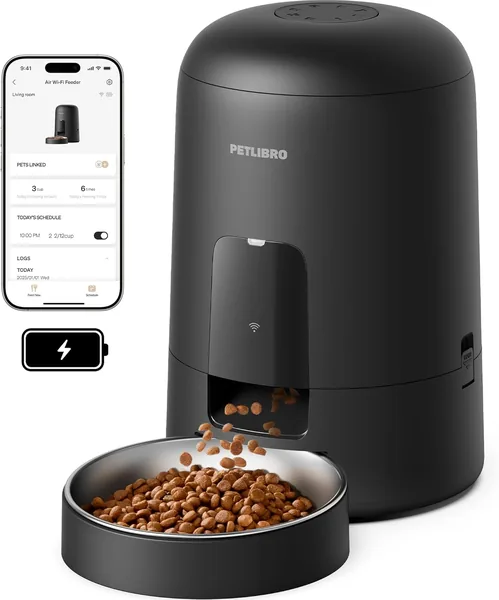
PETKIT PuraMax 2
Triple deodorizing, health tracking — built for multi-cat homes
The Bottom Line
Transitioning to an automatic litter box doesn't have to be stressful — for you or your cat. The key is patience, keeping the old box available, and introducing the cleaning cycle gradually. Within 1–2 weeks, most cats are happily using their new automatic box, and you'll wonder why you didn't make the switch sooner.
Not sure which automatic litter box to choose? Check out our head-to-head comparison of all the top models, or start with our buying guide to find the perfect fit for your home.