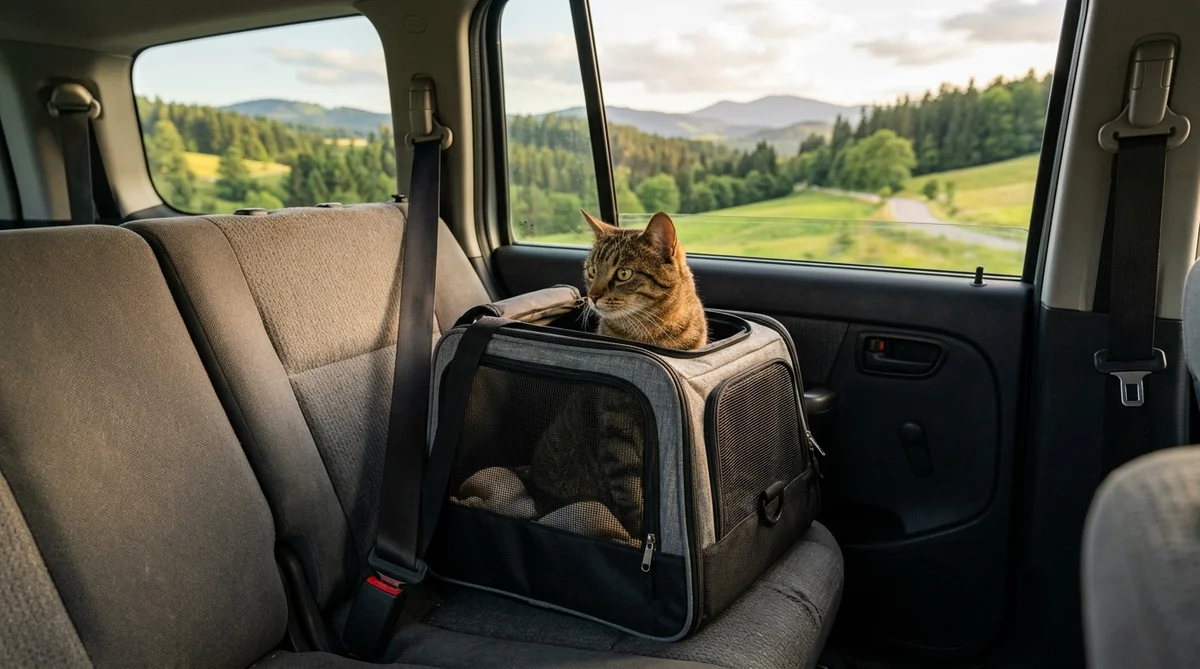
Unlike dogs who often eagerly jump into the front seat with tails wagging, most cats view the car with immediate suspicion. Unfamiliar engine vibrations, shifting gravity, loud road noises, and motion disorientation can trigger intense feline anxiety.
However, whether you are moving across the country, visiting family, or heading to an outdoor retreat, traveling with cats by car does not have to be a stressful ordeal. With thoughtful pre-trip preparation, crash-tested safety gear, and calming techniques, you can transform car travel into a smooth experience for both you and your cat.
1. Choose the Right Secured Travel Carrier
Safety starts with a secure enclosure. Never let your cat roam free inside a moving vehicle. An unrestrained cat can crawl under the brake pedals, jump onto the dashboard, distract the driver, or become a projectile during emergency braking.
Choose a carrier that provides excellent ventilation, durable zippers with locking clips, and built-in seatbelt straps. If you plan outdoor excursions once you arrive, versatile options like sturdy cat backpack carriers offer ergonomic carrying comfort and secure buckle anchors.

PetSafe Happy Ride Collapsible Travel Crate
Crash-tested seatbelt tethering, mesh ventilation, and machine-washable fleece pad
2. Acclimate Your Cat Weeks in Advance
If the only time your cat ever sees their carrier is right before a scary trip to the veterinarian, they will instinctively resist getting inside. Place the carrier in your living room 2 to 3 weeks before your road trip with the door pinned open.
- Place a plush blanket or an old t-shirt with your scent inside the carrier.
- Toss favorite high-value treats and catnip mice inside to encourage voluntary exploration.
- Feed daily meals near or inside the carrier to build positive associative conditioning.
3. Take Short Practice Drives
Do not let your first driving experience be an 8-hour highway journey. Start with short, 5-minute practice drives around your neighborhood. Gradually increase duration to 15 and 30 minutes. This helps your cat adapt to engine hums, acceleration, and turns in controlled, low-stress increments.
4. Manage Motion Sickness and Meal Timing
Cats can suffer from motion sickness caused by inner-ear balance confusion. Feeding your cat a large meal right before stepping into the car is a recipe for nausea, vomiting, or diarrhea.
Feed your cat a light meal 3 to 4 hours before departure. Keep them on an empty stomach during the immediate drive while maintaining access to fresh water during scheduled stops. For anxious cats, pair travel with vet-formulated cat calming treats containing L-theanine, ashwagandha, or melatonin.

Rocco & Roxie Cat Calming Treats
Fast-acting organic ashwagandha, GABA, L-theanine & melatonin chews for travel
5. Secure the Carrier with Seatbelts in the Back Seat
Always position the carrier in the back seat rather than the front passenger seat. Front passenger airbags deploy with explosive force that can crush a pet carrier during a minor collision. Thread the vehicle seatbelt securely through the carrier's designated safety loops so it cannot slide off the seat during sudden stops.
6. Use Calming Pheromone Sprays
Synthetic feline facial pheromones (such as Feliway Classic) mimic the natural comforting scents cats leave when rubbing their cheeks against familiar surfaces. Spray the interior of the carrier and bedding 15 minutes before placing your cat inside. The scent helps lower heart rates and reduces stress vocalizations.
7. Essential Road Trip Packing Checklist
Keep a dedicated "cat travel bag" within easy reach in the passenger compartment rather than buried under luggage in the trunk:
| Essential Item | Purpose | Travel Tip |
|---|---|---|
| Collapsible Litter Box | Sanitary bathroom breaks | Use disposable liners and fast-clumping litter |
| Portable Water Dish | Hydration on rest stops | Offer bottled water to prevent stomach upset |
| Escape-Proof Harness & Leash | Safe handling outside car | Pair with an escape-proof walking harness |
| Enzyme Cleaning Spray & Wipes | Quick accident cleanups | Keep paper towels & trash bags ready |
| Medical Records & Microchip Info | Vet emergency readiness | Store digital photos on your phone |
8. Practice Strict Car Stop Safety
Never open the carrier door while a car door or window is open. A panicked cat can bolt in a split second across a busy highway rest stop. Follow the golden rule of road travel:
- Turn off the engine and roll up all windows completely.
- Keep all vehicle doors shut.
- Fasten an escape-proof harness and leash to your cat before unzipping the carrier door.
- Offer water and a portable litter tray inside the sealed vehicle cabin.
9. Never Leave Your Cat Unattended in a Parked Vehicle
Even on mild 70°F (21°C) days, interior vehicle temperatures can skyrocket past 100°F within 20 minutes, leading to rapid fatal heatstroke. Review our guide on preventing summer feline heatstroke. If you must use a highway service plaza, take turns with a travel companion or utilize pet-friendly drive-throughs.
10. Settle In at Your Destination
Upon arriving at your hotel or new home, set up a small "safe room" (such as a quiet bathroom or bedroom) first. Set out familiar bedding, their litter box, food, and a refreshing cat water fountain. Allow your cat to explore at their own pace before introducing them to the rest of the new environment.
Frequently Asked Questions
Can cats be left loose in the car while driving?
Never. A loose cat can easily slip under the brake pedals, obstruct the driver's vision, or suffer fatal injuries from airbag deployment or sudden stops.
How do you prevent motion sickness in cats during road trips?
Feed your cat 3-4 hours before departure rather than right before leaving, ensure the carrier has proper airflow, use calming pheromone sprays, and consult your vet for anti-nausea medication like Cerenia if needed.
How often should you stop for bathroom and water breaks?
Plan stops every 2 to 3 hours in a parked vehicle with all car doors and windows completely shut before opening the carrier for water or portable litter box access.
Final Thoughts
With patient conditioning, secure equipment, and calm routines, traveling with your cat by car can be a safe and rewarding experience. Combine your car setup with a cozy window perch and an enriched home environment once you reach your destination!