Why August Grooming Is Critical for Feline Health
August marks the peak of late-summer heat and humidity, making it one of the most challenging months for your cat's coat and skin. During late summer, cats undergo intense seasonal shedding as their bodies prepare to transition from light summer fur to dense fall coats.
If dead fur isn't regularly removed during August, it quickly traps heat against your cat's body, leads to painful mats, and spikes the frequency of uncomfortable (and potentially dangerous) hairballs. Trapped heat is especially dangerous during peak summer temperatures — see our guide on summer cat heat stroke prevention for warning signs. Furthermore, increased humidity and skin moisture create a prime breeding ground for flea activity, dander buildup, and localized skin irritation.
By adjusting your grooming routine specifically for August, you can keep your feline companion cool, comfortable, and shedding-free. Here are 8 vet-backed August cat grooming essentials every owner should follow.
8 August Cat Grooming Essentials
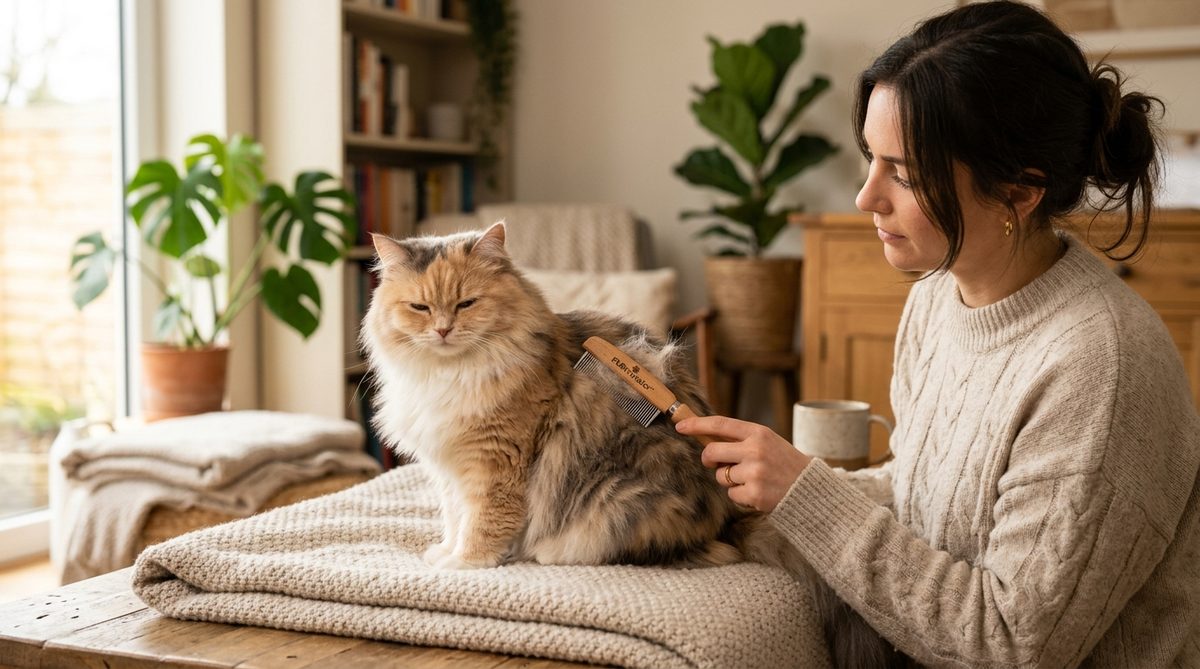
1. Switch to Daily De-Shedding Brushing
During August's heavy shedding cycle, weekly brushing simply isn't enough. Daily 5-to-10 minute grooming sessions with an undercoat deshedding tool (like the FURminator deShedding Tool) remove loose undercoat fur before your cat swallows it while self-grooming.
Pro Tip: Focus on high-shedding areas such as the hindquarters, chest, and behind the ears where dense undercoat fur tends to cluster and mat easily.
2. Prevent Late-Summer Hairball Discomfort
Excessive self-grooming in August causes cats to ingest significantly higher volumes of fur. When this fur combines with food in the stomach, it forms stubborn hairballs that cause vomiting or lethargy.
In addition to daily brushing, support your cat's digestive tract by incorporating a daily hairball gel, omega-3 fish oil, or adding fresh cat grass to your home to encourage healthy digestion.
3. Inspect for Fleas and Parasites Weekly
August is peak flea season in most regions. Even 100% indoor cats can catch fleas carried inside on shoes, clothing, or screened windows. During your grooming sessions, part your cat's fur down to the skin along the lower spine and tail base to inspect for fleas or dark "flea dirt."
If you spot parasite activity, use a fine-toothed flea comb dipped in warm soapy water and consult your vet for preventative topical treatments.
4. Hydrate Skin with Omega-3 Fatty Acids
Air conditioning and high summer heat can dry out your cat's skin beneath their fur, resulting in flaking dander and excessive scratching. Adding wild Alaskan salmon oil or omega-3 fatty acid supplements to their daily wet food helps nourish the skin barrier from the inside out, keeping their coat soft and glossy.
5. Use Waterless Cat Shampoo for Quick Freshening
Full baths with water stress most cats out and can strip away natural protective skin oils. For late-summer freshening, opt for a leave-in waterless foam shampoo or hypoallergenic cat grooming wipes.
Wiping your cat down with a damp conditioning wipe removes surface pollen, dust, and excess saliva without causing bath-time stress.
6. Keep Paws and Claws Trimmed
Indoor cats spend more time lounging on cool tile or hardwood floors during August. Overgrown claws can snag on rugs or split when cats stretch on hard surfaces. Trim the tips of your cat's claws every 2 to 3 weeks using pet nail clippers to prevent painful splits and keep them comfortable.
7. Gently Clean Ears and Eye Corners
Summer humidity increases natural oil and wax buildup in ears, while seasonal allergens can cause mild tear staining around the eyes. Use a soft cotton pad moistened with warm water or a vet-approved ear cleaning solution to gently wipe the outer ear flap and eye corners.
8. Never Shave a Cat's Coat
It can be tempting to shave a long-haired cat in August thinking it will cool them down. However, a cat's coat acts as natural thermal insulation, protecting them against both extreme heat and UV sunburn. Shaving disrupts their body's natural temperature regulation and leaves their delicate skin vulnerable to sunburn and bug bites.
Cat Grooming Tools Comparison
Having the right tools for your cat's specific fur type makes August grooming quick and stress-free:
| Grooming Tool | Best For | August Benefit |
|---|---|---|
| Deshedding Tool (e.g. FURminator) | Medium to long-haired cats | Removes trapped undercoat fur up to 90% |
| Slicker Brush | All coat types | Untangles fine fur & prevents minor mats |
| Rubber Massage Brush (ZoomGroom) | Short-haired & sensitive cats | Attracts loose fur while massaging skin |
| Fine Flea Comb | Daily parasite checks | Catches fleas & flea dirt near tail base |
Summary
August cat grooming is all about consistency. Spending 5 to 10 minutes brushing your cat every day keeps shedding under control, reduces dangerous hairballs, and strengthens the bond between you and your pet.
Explore our detailed FURminator deShedding Tool Review to see how the top deshedding brush performed in our hands-on testing!