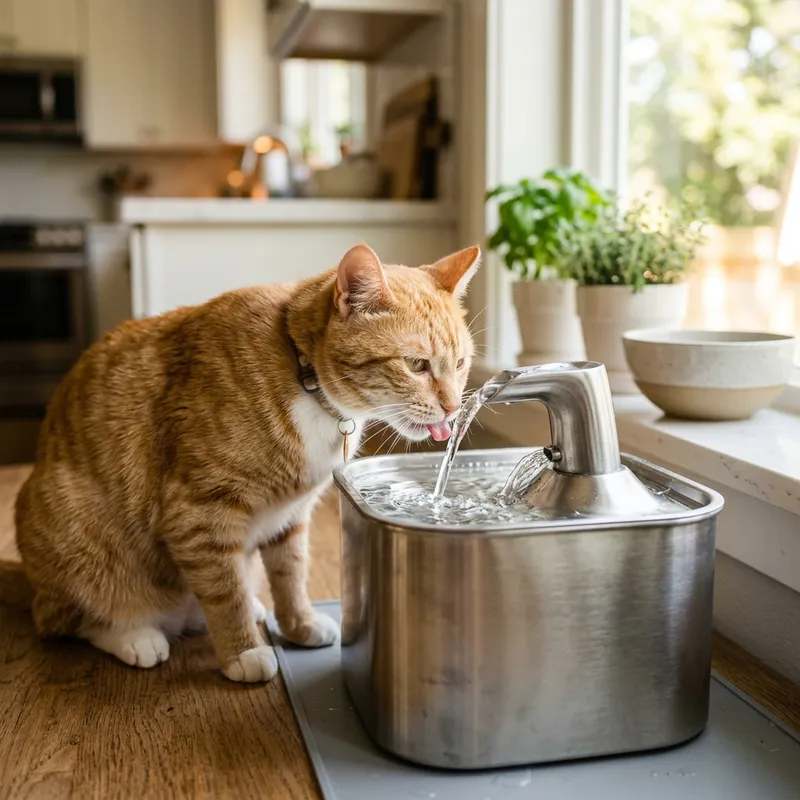
Here's a scary statistic: cats evolved as desert animals, which means their thirst drive is naturally weak. They don't feel the urge to drink water the way dogs (or humans) do. In cooler months, most cats get by. But when summer temperatures climb above 80°F, dehydration becomes a genuine emergency risk — and by the time you notice the signs, your cat may already be in trouble.
Why Cats Are Terrible at Staying Hydrated
Your cat's ancestors were North African wildcats that got most of their moisture from prey — mice, birds, and lizards are about 70% water. Modern indoor cats eating dry kibble get almost zero moisture from food (dry kibble is only 6–10% water), and their instinct to seek out drinking water hasn't evolved to compensate.
This creates a chronic low-grade dehydration that most owners never notice. Add summer heat on top of that, and you're looking at concentrated urine, stressed kidneys, and a much higher risk of urinary crystals, blockages, and kidney disease — especially in male cats.
5 Warning Signs of Dehydration in Cats
Learn to spot these before they become emergencies:
- Skin tent test: Gently pinch the skin between your cat's shoulder blades and release. Hydrated skin snaps back instantly. If it stays "tented" for more than 1–2 seconds, your cat is dehydrated.
- Dry, tacky gums: A hydrated cat's gums should feel wet and slippery. Sticky or dry gums are a red flag.
- Sunken eyes: Dehydrated cats develop a hollow, dull look around their eyes.
- Reduced litter box output: If you're scooping noticeably less urine, or the clumps are very small and dark, your cat isn't drinking enough.
- Lethargy and loss of appetite: A dehydrated cat will become sluggish and uninterested in food. In summer heat, this can escalate to heat exhaustion quickly.
Emergency warning: If your cat is panting with an open mouth in the heat, this is a veterinary emergency. Cats do NOT pant like dogs under normal circumstances. Get them to a cool room and call your vet immediately.
11 Vet-Backed Ways to Keep Your Cat Hydrated
1. Switch to a Cat Water Fountain
This is the single most effective change you can make. Cats are instinctively drawn to moving water — in the wild, still water can harbor bacteria, so their brain associates flowing water with safety. A quality water fountain can increase your cat's daily water intake by 30–50%.
We tested the top options in our Best Cat Water Fountains 2026 guide. Look for stainless steel or ceramic (not plastic, which harbors bacteria and can cause chin acne).
2. Add Water to Wet Food
Wet food is already 75–80% moisture, but you can boost it further. Add 1–2 tablespoons of warm water to each meal and mix it into the pâté or gravy. Most cats won't notice the difference, but they'll get a significant hydration boost. This works especially well for cats that are picky about their food.
3. Offer Multiple Water Stations
Place water bowls in at least 3–4 locations around your home. Cats are more likely to drink when they stumble across water during their regular patrol routes. Key placements:
- Near their favorite sleeping spot (cats drink most after waking up)
- Away from the litter box (cats instinctively avoid water near elimination areas)
- Away from food bowls (cats in the wild don't drink near their kill sites)
- On different floors of your home if applicable
4. Try Ice Cubes and Frozen Treats
Drop a few ice cubes into your cat's water bowl on hot days. Many cats are fascinated by the bobbing ice and will play with (and inadvertently drink from) the bowl. You can also make frozen treats:
- Tuna ice cubes: Mix a small amount of tuna juice (from canned tuna in water, not oil) with water and freeze in an ice cube tray. Drop one into their water bowl.
- Bone broth popsicles: Freeze low-sodium, onion-free bone broth in small silicone molds. These are irresistible to most cats.
5. Switch to Wide, Shallow Bowls
Many cats experience whisker fatigue from deep, narrow bowls — their sensitive whiskers press against the sides, causing discomfort that discourages drinking. Switch to wide, shallow dishes (at least 5 inches across) or purpose-built whisker-friendly bowls. You'll often see an immediate increase in water intake.
6. Keep Water Fresh and Cool
Would you want to drink lukewarm water that's been sitting out for 12 hours? Neither does your cat. Change water bowls at least twice daily in summer — morning and evening. Cats are extremely sensitive to taste and temperature changes, and stale water develops a "flat" taste from off-gassing.
7. Use Filtered or Bottled Water
Tap water contains chlorine, fluoride, and minerals that cats can taste (and often dislike). If your cat turns up their nose at their water bowl, try switching to filtered water for a week. Many reluctant drinkers will increase intake noticeably. This is especially effective in areas with heavily chlorinated municipal water.
8. Create Hydration-Boosted Meals
If your cat eats dry food and you can't switch entirely to wet, try these hydration hacks:
- Kibble soup: Add warm water to dry food and let it soak for 10 minutes before serving. Start with a small amount of water and increase gradually so your cat adjusts.
- 50/50 split: Serve wet food for one meal and dry for the other. Even one wet meal a day makes a meaningful difference.
- Broth topper: Pour a tablespoon of low-sodium, onion-free chicken broth over dry food.
9. Monitor with a Smart Feeder
If you're away during the day, a smart automatic feeder can help you schedule wet food meals that won't sit out too long. Timed feeders with ice packs are ideal for summer — they keep wet food cool until the scheduled feeding time, preventing bacterial growth while ensuring your cat gets moisture-rich meals throughout the day.
10. Keep Your Home Cool
Cats in hot environments pant and sweat through their paw pads, losing moisture faster. Keep indoor temperatures below 80°F. Tips for hot days:
- Close blinds on sun-facing windows during peak heat (10 AM – 4 PM)
- Set up a fan near their favorite resting spot
- Provide cool tile or marble surfaces for them to lie on
- Never leave a cat in a parked car — interior temperatures can reach 120°F in minutes
Check out our Complete Indoor Cat Setup Guide for more ideas on creating a comfortable environment.
11. Track Their Water Intake
A healthy cat should drink approximately 3.5–4.5 ounces of water per 5 pounds of body weight per day. For a 10-lb cat, that's about 7–9 ounces (roughly one cup). If you want to measure precisely:
- Use a measuring cup to fill the water bowl each morning
- At the end of the day, pour remaining water back into the measuring cup
- The difference is your cat's daily intake
- Track for a week to establish a baseline
If intake is consistently below the recommended amount, try the strategies above. If it stays low despite your efforts, consult your vet — some cats have underlying conditions (kidney disease, diabetes, hyperthyroidism) that affect thirst.
Special Considerations for Summer
Outdoor and Indoor-Outdoor Cats
If your cat goes outside, place a shaded water bowl on the porch or patio. Refresh it twice daily — outdoor water heats up fast and grows algae quickly in sunlight. Consider a pet-safe outdoor fountain that keeps water moving and cooler.
Senior Cats
Cats over 10 years old are at significantly higher risk for kidney disease, which is worsened by dehydration. Senior cats may also have mobility issues that make reaching water bowls difficult. Place bowls at ground level (no jumping required) and close to their resting areas.
Multi-Cat Households
In homes with multiple cats, dominant cats can guard water sources, preventing timid cats from drinking. The rule of thumb: one water station per cat, plus one extra. Spread them throughout the house so every cat has easy access.
When to Call the Vet
Seek veterinary care immediately if your cat shows:
- Open-mouth panting that doesn't resolve within minutes of moving to a cool area
- No urination for 24+ hours (especially in male cats — this can indicate a life-threatening urinary blockage)
- Vomiting combined with refusal to drink
- Skin that stays tented for more than 3 seconds
- Drooling excessively in the heat
Your vet can administer subcutaneous fluids (a quick injection of fluids under the skin) that rehydrates your cat within hours. This is a common and safe procedure.
The Bottom Line
Cats are hardwired to under-drink, and summer heat makes this dangerous. The three most impactful changes you can make are: (1) get a water fountain, (2) feed wet food, and (3) place water stations in multiple locations. These three steps alone will dramatically reduce dehydration risk.
Start making these changes now, before the peak heat hits. Your cat's kidneys will thank you for decades.