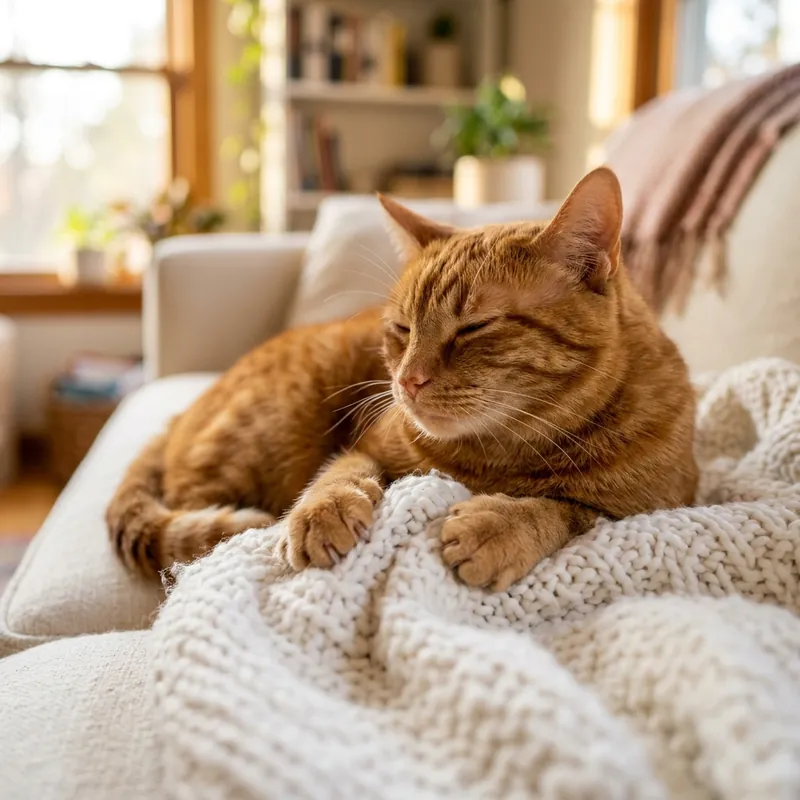
Your cat climbs onto your lap, settles in, and then starts rhythmically pushing their paws into your thigh — left, right, left, right — like they’re kneading dough at a tiny bakery. Cat lovers call it “making biscuits,” and it’s one of the most universally adorable cat behaviors. But why do they do it?
Kneading is a deeply instinctive behavior that begins in kittenhood and persists throughout a cat’s entire life. It’s not random — there’s real biology, emotion, and even territorial strategy behind every rhythmic push. Here are six science-backed reasons your cat makes biscuits.
What Is Kneading, Exactly?
Kneading is the rhythmic, alternating motion where a cat pushes their front paws in and out against a soft surface — blankets, pillows, your stomach, or even the air. Some cats use just their front paws, while others engage all four. Some extend their claws during each push (ouch), and others keep them retracted.
The motion typically follows a consistent tempo: about one push per second, and sessions can last anywhere from 30 seconds to 20+ minutes. Many cats purr simultaneously, and some enter a trance-like state with half-closed eyes — the feline equivalent of pure bliss.
6 Reasons Cats Knead
1. Kitten Nursing Instinct
This is the most widely accepted explanation. Kneading begins within hours of birth. Newborn kittens knead their mother’s mammary area to stimulate milk flow while nursing. The rhythmic pushing motion compresses the tissue around the nipple, triggering a let-down reflex that releases milk.
As cats grow up, they retain this motion as a comfort behavior — a deeply embedded muscle memory associated with warmth, safety, and being fed. When your adult cat kneads your lap, they’re essentially reverting to their most secure kitten state. It’s the feline version of a human sucking their thumb or hugging a childhood blanket.
2. Scent Marking (Territory Claim)
Cats have scent glands in their paw pads called interdigital glands. Every time your cat kneads a surface, they deposit invisible pheromones that signal: “This is mine.”
This is a subtle but important territorial behavior. When your cat kneads you, they’re literally marking you as their property. When they knead a blanket or bed, they’re claiming that sleeping spot. In multi-cat households, you might notice cats preferentially kneading their favorite spots — that’s scent-based real estate.
3. Comfort and Stress Relief
Kneading is a self-soothing behavior. The repetitive motion triggers the release of endorphins — the same feel-good hormones that make humans feel calm during yoga or meditation. It’s why cats often knead when they’re:
- Settling down for a nap
- Sitting on a warm lap
- Recovering from a stressful event (vet visit, loud noise, new guest)
- Being pet in their favorite spots (chin, cheeks, behind ears)
If your cat kneads more than usual, it could signal they need more environmental comfort. Consider adding cozy spots, enrichment elements, or calming pheromone diffusers.
4. Preparing a Sleeping Spot (Wild Ancestry)
Before domestication, wild cats would knead tall grass, leaves, or undergrowth to create a soft, flat sleeping area — similar to how dogs circle before lying down. This “nesting” behavior helped them:
- Flatten sharp debris into a comfortable bed
- Check for hidden threats (snakes, insects) in the vegetation
- Create insulation against cold ground
Your domestic cat doesn’t need to flatten any grass, but the instinct remains hardwired. Watch closely: many cats knead a blanket in circles before curling up — a perfect echo of their wild ancestor’s nesting ritual.
5. Showing Affection and Trust
Not all kneading is self-directed. When your cat specifically seeks out your lap, chest, or stomach to knead on, it’s a deliberate display of affection and vulnerability. A kneading cat is:
- Relaxed enough to drop their guard completely
- Associating you with the safety they felt as a nursing kitten
- Expressing bonding hormones (oxytocin release has been measured in cats during purring/kneading sessions)
If your cat kneads on you specifically — and not just any soft surface — consider yourself their chosen human. It’s one of the highest compliments a cat can give.
6. Stretching Muscles and Tendons
Cats are champion sleepers, logging 14–16 hours daily. All that sleeping leaves muscles stiff. Kneading serves as a low-effort stretch for the muscles and tendons in their paws, wrists, and forearms.
Think of it as feline physical therapy. The push-pull motion extends and contracts the flexor tendons in each toe, keeping them limber and ready for climbing, scratching, and hunting. You’ll often see cats knead right after waking up from a long nap — exactly like how you stretch your arms overhead first thing in the morning.
What About Kneading Variations?
Kneading With Claws Out
Some cats extend their claws fully during each push, which can be painful on your lap. This is completely normal — it’s how kittens stimulate milk flow most effectively. If it hurts, place a thick blanket or towel on your lap as a barrier. Never punish a kneading cat — they’re expressing trust, and punishment will damage your bond.
Kneading + Drooling
If your cat drools while kneading, that’s an even deeper regression to kitten nursing behavior. The kneading motion triggers their salivary reflex because it’s so strongly associated with feeding. It’s a sign of extreme contentment — they’re so relaxed their body thinks they’re nursing.
Kneading + Suckling
Some cats suckle on blankets, earlobes, or clothing while kneading. This is more common in cats that were weaned too early (before 8 weeks). It’s a comfort behavior, not a health concern — unless they’re actually ingesting fabric (called pica), which requires a vet visit.
Kneading the Air
Ever seen your cat lying on their side, kneading the air with their front paws? This usually happens during deep relaxation or while being pet. They’re so content that the kneading reflex fires even without a surface to push against. It’s the ultimate compliment.
Should You Worry About Excessive Kneading?
Normal kneading is nothing to worry about. However, sudden increases in kneading frequency or intensity — especially paired with other behavioral changes — can sometimes indicate:
- Anxiety or stress — increased self-soothing as a coping mechanism
- Pain — some cats knead when experiencing discomfort (the endorphin release provides mild pain relief)
- Hormonal changes — unspayed female cats may knead more when in heat
If your cat’s kneading pattern changes dramatically and is accompanied by appetite changes, hiding, or litter box avoidance, consult your vet to rule out underlying issues.
The Bottom Line
Your cat makes biscuits because it feels good. It’s a cocktail of kitten nostalgia, territorial instinct, stress relief, and genuine affection. Whether they’re kneading your lap at midnight, a warm blanket, or thin air — every push says the same thing: “I feel safe, I feel happy, and I feel at home.”
So the next time your cat starts up the biscuit factory on your stomach, try not to flinch at the claws. Just place a blanket down, enjoy the purrs, and know that you’ve earned the highest feline honor: being chosen as the kneading surface.