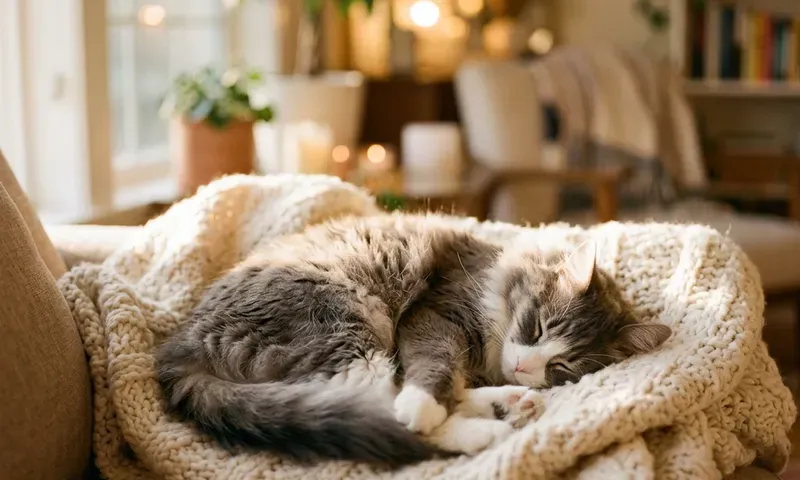
Your cat sleeps an average of 12–16 hours per day. Some senior cats push 20 hours. That's roughly 70% of their entire life spent unconscious. Before you start Googling “is my cat depressed,” relax — this is completely normal, and there's millions of years of evolutionary programming behind it.
The Evolutionary Reason Cats Sleep So Much
Your house cat is, genetically speaking, nearly identical to the African wildcat (Felis silvestris lybica) — a solitary ambush predator that hunts at dawn and dusk. In the wild, a cat's day looks like this:
- Hunt (intense 15–30 minute bursts of explosive energy)
- Eat (consume prey quickly before a competitor arrives)
- Sleep (conserve every calorie until the next hunt)
This hunt-eat-sleep cycle is hardwired into your cat's DNA. Even though your indoor cat has a bowl of kibble available 24/7, their brain still runs the same energy conservation firmware as their wild ancestors. Sleeping 16 hours isn't laziness — it's the default operating mode of an apex predator.
For comparison: lions sleep 18–20 hours a day. Tigers: 16–18 hours. Cheetahs: 12–14 hours. Your tabby fits right in with the big cats.
The Two Types of Cat Sleep
Not all cat naps are created equal. Your cat cycles between two distinct sleep states:
1. Light Sleep (Dozing) — ~75% of Sleep Time
This is the classic “cat nap.” Your cat's body is relaxed, but their ears still rotate toward sounds and their eyes may be slightly open. They can go from dozing to fully alert in under a second. This is why your cat seems to “wake up” the instant you open a can of food from two rooms away.
During light sleep, cats maintain enough muscle tension to spring up immediately. It's an evolutionary survival mechanism — a sleeping predator is also potential prey.
2. Deep Sleep (REM) — ~25% of Sleep Time
This is genuine deep sleep with rapid eye movement. You'll notice:
- Twitching paws (they're “running” in their dreams)
- Whisker movements and facial twitches
- Occasional soft chirps or meows
- Complete muscle relaxation — they may flop into bizarre positions
Yes, cats dream. Research shows cats enter REM sleep and likely dream about hunting sequences, exploring territory, and social interactions. If your cat's paws are twitching, they're chasing something in their sleep.
Deep sleep is critical for muscle repair, immune function, and memory consolidation. Kittens and senior cats spend more time in deep sleep than adult cats.
How Much Sleep Is Normal By Age?
Sleep needs change dramatically across a cat's life:
| Age | Hours/Day | Why |
|---|---|---|
| Newborn (0–2 weeks) | 22 hours | Growth hormone released during sleep |
| Kitten (2–6 months) | 18–20 hours | Rapid development, brain wiring |
| Young Adult (6 mo–3 yrs) | 12–14 hours | Peak activity period, least sleep needed |
| Adult (3–10 years) | 14–16 hours | Settled routine, typical house cat range |
| Senior (10+ years) | 16–20 hours | Reduced metabolism, joint stiffness, less energy |
6 Factors That Affect How Much Your Cat Sleeps
1. Weather and Season
Cats sleep more on cold, rainy, or overcast days — just like humans. You'll notice your cat is more active on bright, warm days and practically comatose during storms. This is linked to melatonin production, which increases in low-light conditions.
2. Diet and Feeding Schedule
Cats that eat large meals tend to crash harder afterward (the post-meal food coma is real in cats). Cats on timed feeders with smaller, more frequent meals often have more even energy throughout the day. If your cat is sleeping excessively after meals, consider splitting their daily food into 3–4 smaller portions.
3. Activity Level and Stimulation
A bored cat sleeps more. An indoor cat with no enrichment will sleep out of sheer lack of anything better to do. This is the most common reason owners think their cat sleeps “too much.” The fix isn't less sleep — it's more stimulation during waking hours.
Try:
- Interactive play sessions (15 minutes, twice daily)
- A quality cat tree near a window for bird watching
- Puzzle feeders that make them work for food
- Rotating toys weekly so they stay novel
- An indoor agility course for active cats
4. Indoor vs. Outdoor
Indoor cats typically sleep 1–2 hours more per day than outdoor cats. Outdoor cats have more environmental stimulation (smells, sounds, other animals) that keeps them alert. This doesn't mean you should let your cat outside — indoor cats live an average of 12–18 years vs. 2–5 years for outdoor cats. The extra sleep is a small tradeoff for a much longer life.
5. Weight
Overweight cats sleep more because physical movement is harder and less comfortable. If your cat has gained weight and is sleeping significantly more than usual, the two are likely connected. A proper feeding routine with an automatic portion-control feeder can help manage weight without requiring you to be home for every meal.
6. Social Environment
Cats in multi-cat households sometimes sleep more to avoid conflict with dominant cats. If you notice one cat sleeping in hiding spots rather than in the open, they may be stress-sleeping. Ensure each cat has their own resources — food bowl, water source, litter box, and resting area.
When Excessive Sleep IS a Problem
While 16 hours is normal, sudden changes in sleeping patterns are worth paying attention to. See your vet if you notice:
- Sudden increase in sleep — a cat that normally sleeps 14 hours suddenly sleeping 20 hours could indicate illness
- Sleeping + not eating — this combination is almost always a medical concern. Cats that stop eating for more than 24 hours risk hepatic lipidosis (fatty liver disease)
- Sleeping + hiding — cats instinctively hide when they're sick or in pain. A cat that suddenly sleeps in closets or under beds is likely unwell
- Difficulty waking up — a healthy cat goes from asleep to alert in seconds. If your cat seems groggy or disoriented when waking, it could signal a neurological issue
- Sleeping + changes in litter box habits — increased sleep paired with more (or less) urination or defecation often points to kidney disease, diabetes, or hyperthyroidism
Common medical causes of excessive sleep include:
- Anemia (low red blood cells, causing fatigue)
- Hypothyroidism (rare in cats but causes lethargy)
- Diabetes (energy crashes from blood sugar swings)
- Chronic kidney disease (especially in senior cats)
- Depression (yes, cats can experience depression, often after losing a companion or a major environmental change)
- Pain (arthritis, dental disease, injury)
How to Improve Your Cat's Sleep Quality
Better sleep quality means your cat needs fewer hours to feel rested, which translates to more awake time with you:
- Provide a dedicated sleeping spot — an elevated perch, cat tree platform, or heated bed in a quiet corner. Cats sleep best when they feel secure and slightly elevated.
- Respect the crepuscular schedule — cats are naturally most active at dawn and dusk. Schedule playtime for early morning and evening to align with their natural rhythm, and they'll sleep more soundly in between.
- Keep a consistent routine — feed at the same times, play at the same times. Cats are creatures of habit and sleep better with predictability.
- Ensure proper hydration — dehydrated cats feel lethargic. A cat water fountain encourages more drinking and better hydration, which improves overall energy levels.
- Control temperature — cats prefer sleeping in warm spots (this is why they love sunny windowsills and laptop keyboards). Keep your home at a comfortable temperature, especially for senior cats with arthritis.
The Bottom Line
Your cat sleeping 14–16 hours a day is completely normal and rooted in millions of years of predator evolution. They're not lazy, depressed, or sick — they're conserving energy like the efficient hunters they were built to be.
The only time to worry is when sleeping patterns change suddenly, especially when paired with appetite loss, hiding behavior, or litter box changes. As long as your cat wakes up alert, eats well, plays during their active hours, and shows normal grooming behavior, let them enjoy those 16 hours in peace.
Focus on making their waking hours count — quality playtime, a stimulating environment, and proper nutrition will ensure the sleep they get is restorative, not just a symptom of boredom.