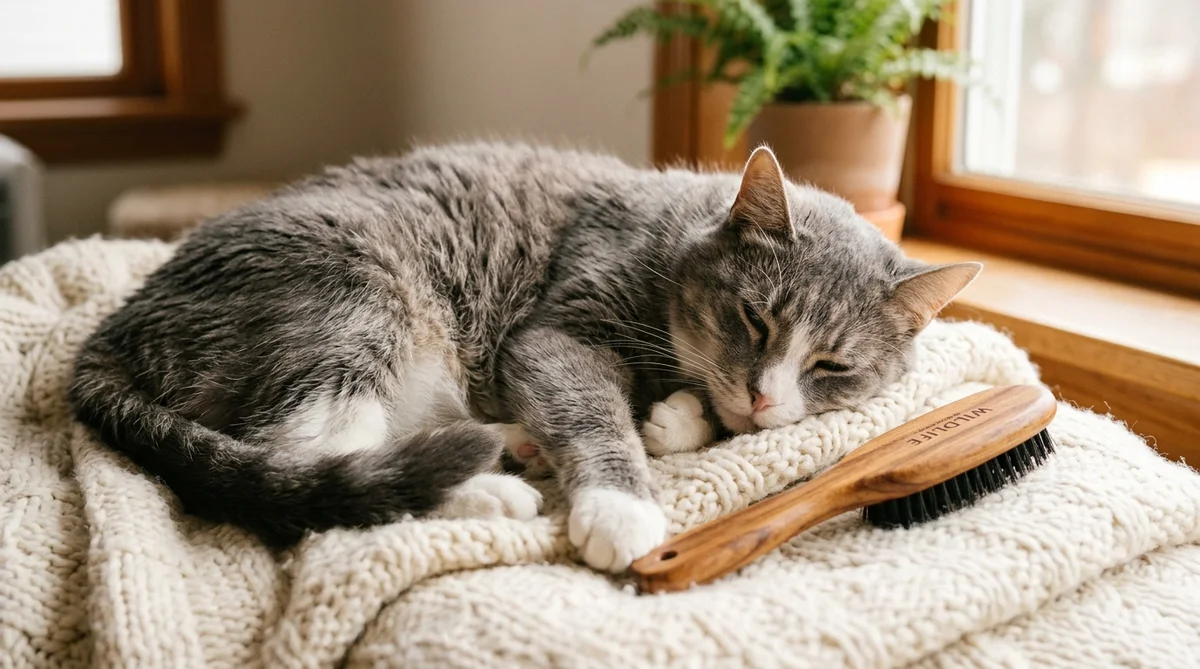
When a young adult cat occasionally hacks up a tubular hairball on your rug, it is usually a minor inconvenience. But when an older cat begins vomiting hairballs frequently, it is a clinical warning sign that demands attention.
Senior cats undergo subtle physiological shifts that make hairballs far more dangerous. Reduced gastrointestinal motility, creeping dehydration from early renal changes, and stiff joints from osteoarthritis all conspire to turn loose fur into stubborn internal blockages. Understanding how aging impacts digestion—and upgrading their care routine—can save your senior cat from distress and emergency surgery.
Why Senior Cats Struggle More with Hairballs
Hairballs (trichobezoars) form when swallowed hair collects in the stomach instead of smoothly passing through the digestive tract into the litter box. In older felines, three primary aging factors accelerate this problem:
- Sluggish GI Motility: Just like aging humans, senior cats experience slower muscular contractions in the stomach and intestines. Hair that would normally pass through in feces lingers in the stomach cavity, tangling into dense mats.
- Subtle Dehydration: Kidney efficiency gradually declines in older cats, resulting in mild, chronic dehydration. Less fluid in the intestines means dry, compacted stool that traps swallowed fur and leads to severe constipation or megacolon.
- Arthritis & Grooming Pain: Cats are fastidious groomers, but spinal arthritis and hip stiffness prevent elderly cats from reaching their hindquarters and lower back. Mats develop rapidly, and when they do groom, they pull out large clumps of dead undercoat all at once. Review our foundational guide on managing cat coat care and shedding reduction.
Gentle Senior Grooming: What Works & What Hurts
Daily brushing is the single most effective way to prevent hairballs because every hair you capture on a brush is a hair your cat doesn't swallow. However, grooming a fragile senior cat requires a different touch than brushing an energetic youngster:
- Avoid Heavy Metal Blades on Bony Areas: Aggressive de-shedding blades can painfully scrape against thinning skin, protruding hips, and sensitive arthritic spines.
- Switch to Ultra-Soft Slickers or Silicone Mitts: Use soft-tipped rubber bristles or rounded slicker brushes that gently massage without pinching.
- Keep Sessions Short & Sweet: Brush for 3 to 5 minutes daily rather than an exhausting 30-minute marathon. Follow up with soothing chin scratches and healthy treats.

VetriScience Calm & Confident Chews
Helps ease grooming anxiety and joint-handling stress in sensitive senior cats
Boost Hydration to Flush the Digestive Tract
Lubrication is the secret weapon against hairballs. Without adequate moisture, swallowed fur forms a dry, felt-like plug in the stomach. Here is how to keep an older cat well-hydrated:
- Transition to High-Moisture Wet Food: Kibble typically contains just 10% moisture, whereas quality canned food contains 75% to 80% water. Mix a tablespoon of warm water or bone broth into their daily canned meals.
- Install Flowing Water Fountains: Cats naturally avoid standing bowls because instinct tells them stagnant water harbors bacteria. An ultra-quiet fountain like the models highlighted in our best cat water fountains guide entices seniors to drink significantly more.
- Multiple Water Stations: Arthritic seniors should never have to climb stairs to reach a water bowl. Place fresh water stations in every major room they frequent.
Digestive Lubricants, Fiber & Safe Supplements
When grooming and hydration aren't quite enough, gentle supplements help move ingested hair through the digestive tract:
- Petroleum-Based Hairball Pastes (Laxatone): Flavored malt or tuna pastes coat swallowed hair and the intestinal lining, allowing hairballs to glide smoothly into stool without vomiting.
- Plain Canned Pumpkin (1/2 teaspoon daily): Pure pumpkin puree provides soluble and insoluble fiber that regulates bowel transit without artificial additives.
- Fresh Cat Grass: Safe, pesticide-free wheatgrass or oat grass provides enzymes and natural fiber. Check our safety review on whether cat grass is safe for indoor cats.
- Omega-3 Fatty Acids (Fish Oil): Reduces inflammation from arthritis, nourishes hair follicles, and reduces dry shedding by up to 50%.
Hairball vs. Feline Asthma: Know the Difference
Many cat parents mistake feline asthma attacks for hairball retching. The distinction is critical:
| Observation | True Hairball Attempt | Feline Asthma Attack |
|---|---|---|
| Body Posture | Abdomen heaves vigorously, head bobs up and down | Hunkered low to the floor, neck extended flat forward |
| Sound | Gagging, wet retching, deep abdominal grunting | Dry wheezing, shallow coughing, rapid breathing |
| Result | Vomits fluid, bile, or a tubular clump of fur within minutes | Nothing comes up; ends with swallowing and heavy panting |
| Action Needed | Monitor; veterinary check if vomiting persists | Immediate veterinary attention (requires bronchodilators) |
Frequently Asked Questions
Are hairballs more dangerous in senior cats than younger cats?
Yes. Senior cats have slower gastrointestinal motility and are prone to chronic dehydration, meaning ingested hair is more likely to form hard intestinal blockages or cause severe constipation.
How often should an older cat vomit hairballs?
Passing a hairball once every few weeks can be normal, but vomiting hairballs weekly or showing signs of unproductive retching, lethargy, or loss of appetite requires immediate veterinary attention.
What is the best way to brush an arthritic senior cat?
Use an ultra-soft slicker brush or silicone grooming mitt with short, gentle strokes, taking extreme care around bony hips, lower spines, and joints where arthritis causes discomfort.
Final Thoughts
Frequent hairballs are not an inevitable badge of feline old age—they are a manageable condition. By providing gentle daily grooming, boosting daily hydration with running water fountains, and supporting digestion with quality fiber, you can keep your senior cat comfortable, healthy, and purring happily for years to come.