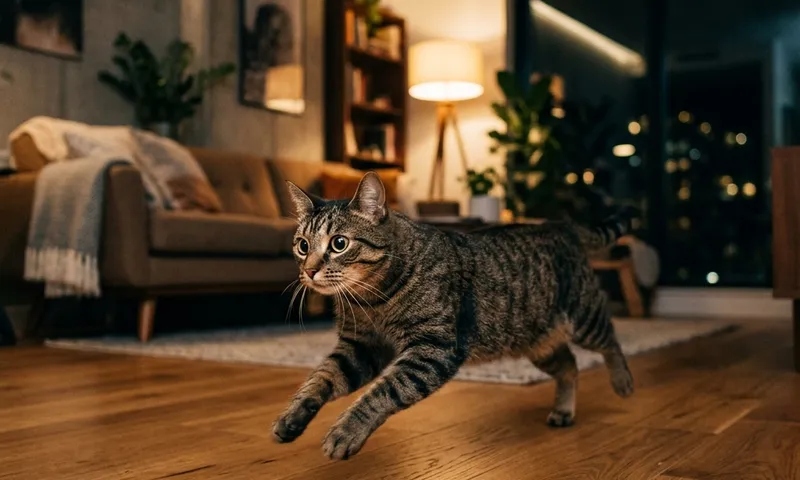
It's 3 AM. You're dead asleep. Then — THUMP. THUMP. CRASH. Your cat launches off the dresser, slides across the hardwood, ricochets off the couch, and sprints through the hallway like something is chasing them. Nothing is chasing them. Welcome to the nightly zoomies.
Formally called Frenetic Random Activity Periods (FRAPs), cat zoomies are sudden bursts of explosive energy where your cat runs, jumps, and generally acts possessed. They're completely normal — but that doesn't make them any less annoying at 3 in the morning.
What Are Cat Zoomies, Exactly?
Zoomies are a rapid release of pent-up energy. During a zoom session, your cat's pupils dilate fully, their tail puffs up or goes rigid, and they sprint at top speed (cats can hit 30 mph in short bursts) through your home. The whole episode typically lasts 1–5 minutes, and then they stop just as suddenly as they started — often sitting down and grooming themselves like nothing happened.
This behavior isn't exclusive to cats. Dogs, rabbits, and even ferrets get zoomies. In cats, it's linked to their predatory instinct cycle: stalk → chase → catch → kill → eat → groom → sleep. The zoomie is the "chase" part playing out without actual prey.
7 Reasons Your Cat Gets the Zoomies at Night
1. They're Crepuscular, Not Nocturnal
Contrary to popular belief, cats aren't truly nocturnal. They're crepuscular — meaning they're most active at dawn and dusk. This is when their wild ancestors hunted, because prey animals (mice, small birds) are most active during these low-light transitions. Your domestic cat's internal clock still runs on this schedule, which is why peak zoomie time tends to fall between 3–5 AM (pre-dawn) and again at dusk.
2. They Slept All Day
If your cat sleeps 14–16 hours daily, they've been storing energy like a battery. By 3 AM, that battery is fully charged and needs to discharge somewhere. Indoor cats are especially prone to this because they lack the natural energy outlets that outdoor cats have — no hunting, no territory patrols, no climbing trees.
3. Boredom and Understimulation
This is the #1 reason for excessive nighttime zoomies. A cat that gets zero interactive play during the day has no outlet for predatory energy. They didn't stalk anything, chase anything, or catch anything — so their brain is screaming for stimulation. The zoomies are your cat's attempt to self-medicate boredom.
Cats in homes with no enrichment setup — no cat tree, no window perch, no puzzle feeders — zoom far more than cats in stimulating environments.
4. Post-Litter Box Energy
This one has a name: the "poop zoomies" (yes, really). Many cats sprint wildly after using the litter box. Theories include:
- Vulnerability response — in the wild, a cat is vulnerable while eliminating. The sprint is an instinctive "get away from the evidence" behavior
- Vagus nerve stimulation — the act of defecating stimulates the vagus nerve, creating a surge of energy and even euphoria
- Relief — especially if the cat was constipated or uncomfortable
If your cat consistently does litter box zoomies at 3 AM, their bathroom schedule may simply align with their crepuscular activity peak.
5. Hunger
Cats that eat dinner at 6 PM and don't get food again until morning may wake up genuinely hungry at 3 AM. Hunger triggers the hunt instinct — and with no prey available, that energy comes out as zoomies. An automatic cat feeder with a late-night portion can solve this completely.
6. Age
Kittens and young cats (under 3 years) zoom significantly more than adult cats. They have massive energy reserves and underdeveloped impulse control. If you have a young cat, expect frequent zoomies — they usually mellow out after age 3.
On the flip side, senior cats that suddenly start zooming after years of calm behavior should see a vet. In older cats, new-onset zoomies can be a sign of hyperthyroidism — a condition that causes excess energy, weight loss, and increased appetite.
7. Stress or Environmental Change
New home, new pet, new baby, new furniture arrangement — any environmental change can trigger anxiety-driven zoomies. Stressed cats also exhibit:
- Over-grooming (bald patches)
- Hiding more than usual
- Changes in appetite
- Aggression toward other pets
If the zoomies started after a major change, give your cat time to adjust and provide extra hiding spots and vertical space.
How to Stop the 3 AM Zoomies: 6 Proven Strategies
1. The Play-Before-Bed Protocol
This is the single most effective strategy. 30 minutes before your bedtime, run your cat through a full hunt simulation:
- Stalk phase (5 min) — drag a wand toy slowly along the ground, letting your cat watch and track it
- Chase phase (10 min) — fast, erratic movements. Get your cat sprinting, jumping, and pouncing
- Catch/kill phase (2 min) — let them "catch" the toy. Let them bunny-kick and chew on it
- Feed immediately after — this completes the hunt cycle. A full stomach triggers the groom → sleep sequence
Do this consistently for 7 days and you'll see a dramatic reduction in nighttime activity. You're essentially exhausting their battery before bed.
2. Schedule a Late-Night Meal
Set an automatic feeder to dispense a small meal between midnight and 2 AM. This prevents hunger-triggered wakeups and gives your cat something to do when they naturally stir. The eating → grooming → sleeping cycle often buys you the rest of the night.
3. Maximize Daytime Enrichment
A cat that's mentally and physically stimulated during the day sleeps harder at night:
- A quality cat tree by a window for bird watching
- Puzzle feeders that make meals a brain workout
- Rotating toys every 3–4 days so they stay novel
- An indoor agility course for high-energy cats
- Cat TV (YouTube bird videos) during peak sun hours
4. Ignore the Performance
Hard truth: if you react to the zoomies, you reinforce them. Getting up to play, feed, or even yell at your cat teaches them that zooming = human interaction. Keep your bedroom door closed, use earplugs, and let them burn it out. After a few weeks of zero reinforcement, the behavior often reduces on its own.
5. Create a Nighttime Zone
Designate a "cat room" away from your bedroom with:
- Water and a water fountain
- A litter box
- Comfortable sleeping spots at multiple heights
- A few toys for solo play
- The automatic feeder for the midnight snack
Close the door at bedtime. This gives your cat a full environment without access to your sleeping space.
6. Rule Out Medical Causes
See your vet if:
- Zoomies started suddenly in an adult cat that was previously calm
- Your cat seems distressed (yowling, not just running)
- The zoomies come with other symptoms: weight loss, increased thirst, appetite changes, or food refusal
- Your senior cat (10+) is suddenly hyper — test for hyperthyroidism
What NOT to Do
- Don't punish your cat — spraying water or yelling doesn't work and damages your bond
- Don't lock them in a small space — a bathroom or crate increases anxiety and makes it worse
- Don't give melatonin without vet approval — cat-safe dosing is different from human dosing
- Don't free-feed to "keep them full" — this leads to obesity without addressing the energy problem
The Bottom Line
Cat zoomies are a normal, healthy behavior — your cat isn't broken, possessed, or trying to ruin your life. They're just running ancient predator software on a body that spent 16 hours sleeping on your couch.
The fix is straightforward: tire them out before bed (15–20 minutes of hard play), feed them late (automatic feeder at midnight), and enrich their daytime so they're not saving all their energy for 3 AM. Most cats respond within 1–2 weeks of consistent schedule adjustment.
And if you have a kitten doing zoomies? Just wait. They grow out of the worst of it by age 3. In the meantime, invest in earplugs.