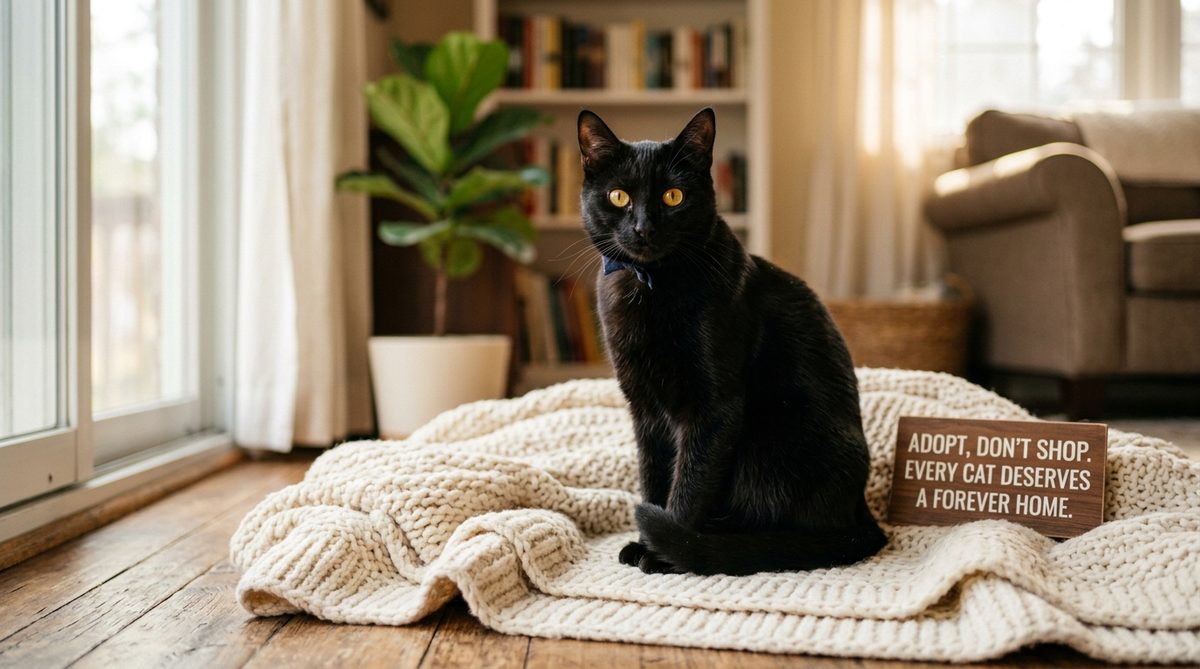
The Black Cat Crisis No One Talks About
Walk into any animal shelter in America and you will notice something heartbreaking: black cats consistently outnumber every other color waiting for adoption. According to the ASPCA, black cats make up roughly 33% of all cats entering U.S. shelters, yet they have the lowest adoption rates and the highest euthanasia rates of any coat color.
The reasons are deeply rooted in centuries of superstition, cultural bias, and even social media aesthetics. In an era of Instagram-worthy pet photos, black cats are often passed over because they are harder to photograph. Their features blend together in low light, making it difficult for shelter listing photos to capture their personality.
This article breaks down why these biases are unfounded, celebrates the unique charm of black cats, and provides actionable ways you can help during Black Cat Awareness Month (officially recognized every August and October).
A Brief History of Black Cat Superstitions
The fear of black cats did not always exist. In fact, throughout most of human history, black cats were revered:
- Ancient Egypt: Cats of all colors, including black, were sacred. Killing a cat was punishable by death. The goddess Bastet was often depicted as a black cat.
- Celtic Mythology: The Cat Sìth, a fairy creature resembling a large black cat, was considered a blessing to those who left out milk on Samhain.
- Japanese Culture: Black cats (kuro neko) are considered good luck charms. Single women who own black cats are believed to attract more suitors.
- British & Scottish Folklore: A black cat crossing your path is considered good luck, the opposite of the American superstition.
The negative association began during the European Middle Ages, when Pope Gregory IX's 1233 papal decree Vox in Rama associated black cats with devil worship. This led to mass killings of black cats across Europe, which historians believe worsened the Black Plague by reducing the natural rodent predator population.
The superstition migrated to colonial America through Puritan settlers and became embedded in Halloween folklore. Today, despite having no basis in fact, the stigma persists in adoption statistics.
7 Reasons to Adopt a Black Cat
1. They Wait the Longest in Shelters
Studies from the University of California, Berkeley show that black cats spend an average of 13% longer in shelters than cats of other colors before being adopted. Many never find homes at all. By adopting a black cat, you are literally saving a life that statistics say was the least likely to be saved.
2. Their Coats Are Genetically Fascinating
The gene responsible for black fur (the B gene, or eumelanin) is actually the dominant color gene in domestic cats. Many black cats carry hidden tabby patterns that become visible in direct sunlight, a phenomenon called ghost striping. Some black cats even shift to a warm chocolate or rusty brown when lounging in a sun patch.
3. Black Cats May Be Healthier
Research published in the Journal of Experimental Biology suggests that the same genetic mutation responsible for black fur may also confer resistance to certain viral infections, including Feline Immunodeficiency Virus (FIV). Scientists at the National Institutes of Health are studying this melanistic gene for potential applications in human HIV resistance research.
4. Every Black Cat Looks Completely Unique
Contrary to the myth that "all black cats look the same," black cats come in an astonishing variety of appearances. Breeds with black coats include the sleek Bombay (bred to look like a miniature panther), the fluffy Persian, the athletic Oriental Shorthair, and the massive Maine Coon. Eye colors range from vivid copper and gold to striking green and rare blue.
5. They Are Natural Comedians
Black cat owners frequently report that their cats are among the most playful, affectionate, and clownish personalities they have ever encountered. While no scientific study links coat color to temperament, the Bombay breed (always black) is specifically bred for its dog-like loyalty and comedic antics.
6. They Look Incredible Against Any Home Decor
From a purely aesthetic standpoint, a sleek black cat is the ultimate statement piece in any home. They complement light furniture, photograph beautifully against bright backdrops, and their glossy coats practically glow when healthy and well-groomed. For grooming tips, check out our Cat Coat Care & De-Shedding Guide.
7. You Become Part of the Solution
Every black cat adopted opens a shelter space for another cat in need. Shelters operating at capacity are forced to make difficult euthanasia decisions, and black cats are disproportionately affected. Your adoption creates a ripple effect that saves more than one life.
How to Help Black Cats (Even If You Cannot Adopt)
- Foster: Many shelters desperately need temporary foster homes, especially for black kittens during "kitten season" (spring through fall). Fostering socializes cats and dramatically increases their adoption chances.
- Share Shelter Listings: Social media sharing is the single most effective way to get overlooked black cats noticed. When sharing shelter photos, add a personal caption explaining why black cats are special.
- Volunteer for Better Photography: Offer to photograph shelter cats using proper lighting techniques. Black cats photograph best against light, contrasting backgrounds with natural window light.
- Donate to Black Cat Programs: Organizations like Best Friends Animal Society and local shelters often run reduced-fee adoption events specifically for black cats.
- Educate Children: Teaching the next generation that black cats are not "scary" or "unlucky" breaks the superstition cycle permanently.
Preparing Your Home for a New Cat
If you are ready to welcome a black cat (or any cat) into your family, preparation makes the transition smoother for everyone. Here are some essentials:
- Clean, accessible litter box: Self-cleaning options like the Litter-Robot 4 keep the box fresh 24/7, which is especially important during the adjustment period when stress can cause litter avoidance.
- Gradual introductions: Keep your new cat in a single "safe room" for the first 3 to 5 days with food, water, litter, and a cozy hiding spot. Read our Complete Indoor Cat Setup Guide for a step-by-step approach.
- Vertical space: Cats feel secure when they can survey their territory from above. A sturdy cat tree or window perch gives them confidence in a new environment.
- Fresh water: Nervous cats may not drink enough from a still bowl. A cat water fountain encourages hydration through flowing water that appeals to their instincts.
- Summer safety: If you are adopting during the warmer months, keep your home cool and watch for signs of overheating. Our summer cat heat stroke prevention guide covers 15 essential safety tips.
- Patience: Some adopted cats take days to warm up, others take weeks. Let them set the pace. Forced interaction increases anxiety. Our guide on managing cat anxiety has tips that apply to new adoption transitions too.
Black Cat Awareness Month: When & How to Celebrate
August 17 is officially recognized as National Black Cat Appreciation Day in the United States. The entire month of October is designated Black Cat Awareness Month, timed to counteract the negative Halloween associations that historically spike black cat abandonment and cruelty.
Many shelters offer reduced adoption fees or fee-waived adoptions for black cats during these awareness periods. Check your local shelter's website or social media pages for upcoming events.
Summary
Black cats are not bad luck. They are the unluckiest cats in the shelter system because centuries-old superstitions still influence adoption decisions today. They wait longer, get overlooked more often, and face higher euthanasia rates than cats of any other color.
Whether you adopt, foster, volunteer, or simply share a shelter listing on social media, every action chips away at a bias that has no place in 2026. The best luck a black cat can have is you.