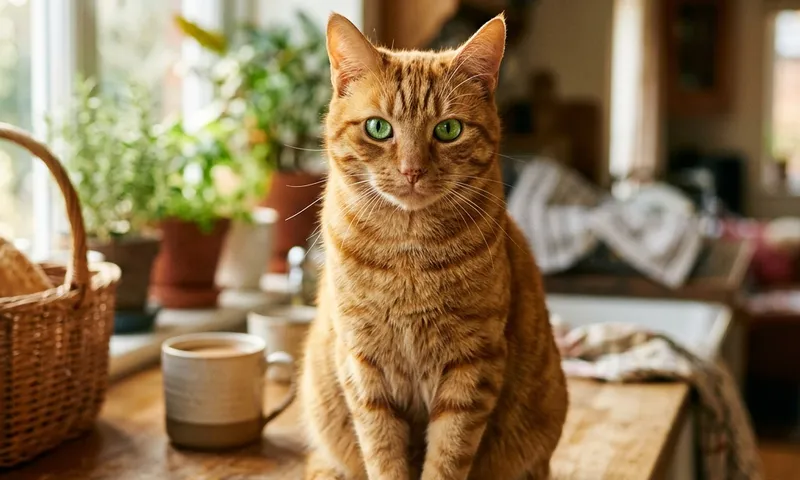
You look up from your phone. Your cat is sitting three feet away, staring at you. Not blinking. Not moving. Just… staring. You stare back. They don't flinch. It's been 45 seconds. You look away first. They win. Again.
If your cat's unblinking gaze makes you feel like you're being studied by a tiny, furry scientist — you're not wrong. Cats are hyper-observant predators, and staring is one of their primary tools for gathering information about their environment. But the reason behind the stare changes depending on the context.
Here are 8 reasons your cat stares at you, what each look actually means, and when you should be concerned.
1. The Slow Blink: "I Love You"
If your cat stares at you and then slowly closes and reopens their eyes, congratulations — you've just received the feline equivalent of "I love you." Researchers at the Universities of Sussex and Portsmouth published a 2020 study confirming that slow blinks are a deliberate social signal in cats.
In the wild, prolonged eye contact is a threat display. By slowly closing their eyes in your presence, your cat is signaling: "I trust you enough to make myself vulnerable." It's the opposite of aggression.
Try this: Next time your cat slow-blinks at you, do it back. The study found that cats are significantly more likely to approach humans who slow-blink at them. It's a genuine two-way communication tool.
2. The Dinner Stare: "Feed Me. Now."
This is the stare you get at 5:47 PM when dinner is at 6:00 PM. Your cat sits near the food bowl (or near you, if you're the food-delivery system) and locks eyes with laser precision. Sometimes they add a soft meow or a head tilt for extra manipulation.
Cats are masters of operant conditioning — except they've conditioned you. They've learned that staring + meowing + sitting near the bowl = food appears. If you've ever caved and fed them early, you've reinforced this behavior permanently.
If your cat's dinner stare is escalating into constant begging, an automatic cat feeder removes you from the equation entirely. The machine dispenses food on schedule, and your cat will redirect the stare toward the feeder instead.
3. The Curiosity Stare: "What Are You Doing?"
Cats are observational learners. When you do something they don't understand — typing on a keyboard, folding laundry, exercising on the floor — they watch intently to figure out what's happening. This is the same focused attention they'd use watching a bird through a window.
This stare is usually accompanied by:
- Ears rotated forward (information-gathering mode)
- Head tilts when sounds change
- Tail gently swishing (processing, not agitated)
- Sudden pounce if your hand moves in an interesting way
This is completely normal and healthy. Your cat is engaged with their environment, which is exactly what you want — especially for indoor cats that need mental stimulation.
4. The Bonding Stare: "You're My Person"
Some cats stare simply because they're bonded to you and you're the most interesting thing in their world. This is especially common in single-cat households where you're their primary social companion.
A bonding stare looks like:
- Relaxed body posture (loaf position, side-lying, or sitting with tucked paws)
- Half-closed or soft eyes (not wide and alert)
- Purring (sometimes silent — put your hand on their throat to feel it)
- Located near you but not demanding anything
This is the cat equivalent of a dog lying at your feet. They're content, safe, and watching you because your presence is comforting. If your cat sleeps near you and stares when awake, you've achieved maximum cat trust.
5. The Hunting Stare: "You're Prey (Sort Of)"
This one's unmistakable. Your cat's body goes low to the ground. Their eyes lock onto your feet, ankles, or hands. Their pupils dilate to full black moons. Their butt wiggles. Then — pounce.
The hunting stare activates when your cat's predatory instincts kick in. Common triggers:
- Feet moving under blankets
- Hands typing on a laptop
- Walking past them in a hallway (the ambush corridor)
- Dangling earbuds, drawstrings, or hair ties
This isn't aggression — it's play drive. Your cat needs an outlet for predatory energy. Redirect it with interactive wand toys, an indoor agility course, or puzzle feeders that simulate the hunt → catch → eat cycle.
If your cat stalks and attacks your ankles regularly, they're telling you they're bored and understimulated. More playtime, not punishment, is the fix.
6. The Territorial Stare: "This Is My House"
In multi-cat households, you might catch one cat staring at another without blinking. This is a dominance display — the feline version of a standoff. The cat who looks away first concedes.
If your cat stares at you with a hard, unblinking gaze — body tense, tail low and flicking — they may be asserting territorial boundaries. This is more common when:
- You're sitting in "their" spot
- A new pet or person has entered the home
- You've rearranged furniture (their scent map is disrupted)
- You just came home smelling like another animal
The fix: don't stare back. In cat language, prolonged direct eye contact is confrontational. Look away slowly, blink, and let them have the win. They'll relax.
7. The "Something's Wrong" Stare: Medical Signals
Sometimes a stare isn't behavioral — it's your cat trying to tell you they feel off. Cats are stoic animals that hide illness, so unusual staring patterns can be an early warning:
- Staring at walls or corners — possible neurological issue, feline cognitive dysfunction (in seniors), or vision problems
- Staring + yowling — may indicate pain, hyperthyroidism, or high blood pressure
- Staring at food but not eating — dental pain, nausea, or GI discomfort (see: 9 reasons your cat sniffs food but won't eat)
- Suddenly staring at you more than usual — if paired with increased thirst, weight loss, or restlessness, get a vet check for thyroid or kidney issues
Rule of thumb: If the staring behavior is new, happened suddenly, and comes with other symptom changes, schedule a vet visit.
8. The Night Watch: "I'm Guarding You"
Wake up at 2 AM and find your cat sitting on the nightstand, staring at your face in the dark? They're not plotting your demise (probably). Many cats take on a guardian role while their humans sleep.
This behavior traces back to wild cat colony dynamics, where cats take turns keeping watch for predators while others sleep. Your cat may also be:
- Waiting for you to wake up (because waking up = breakfast)
- Monitoring your breathing patterns (cats are attuned to routine changes)
- Simply enjoying the quiet company
If the nighttime staring comes with 3 AM zoomies, your cat may need more evening playtime and a late-night snack to reset their activity cycle.
How to Respond to Your Cat's Stare
| Stare Type | What to Do |
|---|---|
| Slow blink | Slow-blink back — it deepens your bond |
| Dinner stare | Stick to feeding schedule; consider an auto feeder |
| Curiosity stare | Let them watch — it's enrichment |
| Hunting stare | Redirect with toys — more playtime needed |
| Hard territorial stare | Look away slowly — don't escalate |
| Staring at walls | Vet visit — possible neurological issue |
| Night watching | Normal — add evening play session |
The Bottom Line
Your cat stares at you because you matter to them. Whether it's a slow-blink love letter, a strategic dinner campaign, or genuine curiosity about why you're talking to a glowing rectangle for 6 hours — the stare is a form of engagement.
The most important thing is context. A relaxed cat with soft eyes is communicating affection. A tense cat with dilated pupils and a twitching tail is on high alert. And a cat staring at food without eating needs a closer look.
If you want to strengthen the bond, start slow-blinking. Provide plenty of vertical spaces and fresh water sources so they feel secure in their territory. And when your cat stares at you from across the room at 3 AM? Just blink back. You're having a conversation.